
Office Space with a Terrace in Dublin: What to Check

There is a moment on an office viewing when a terrace can win the room. The doors open, the team steps outside, and the space suddenly feels bigger than the floor plan. It is easy to picture a coffee break there, or a conversation that might be awkward across a desk. The harder question comes after the view: will your people actually be able to use it on an ordinary working day?
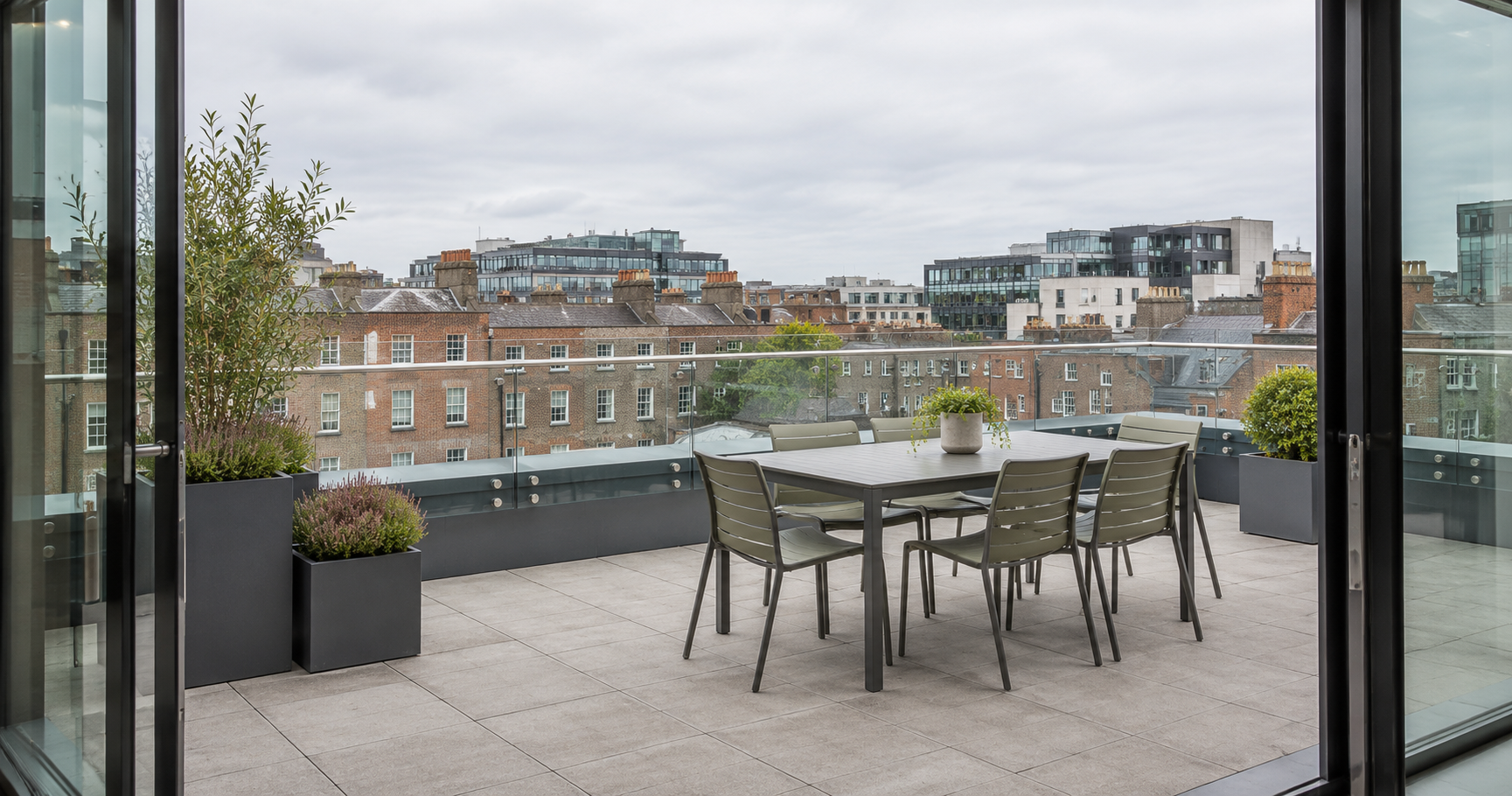
If you are looking for office space with a terrace in Dublin, treat the outdoor area as a working amenity to verify, not a photograph that settles the decision. Ask who can use it, when it is open, how many people it seats, what rules apply and whether access is included with the office you are considering. A good terrace can make a workplace more pleasant. A terrace that is locked, crowded or unsuitable for your team may add little.
The question behind the terrace photograph
“Outdoor space” can describe several different arrangements. It may be a roof terrace shared by everyone in a serviced building, a courtyard beside a communal lounge, a balcony attached to one suite, or a landscaped space managed by the landlord. The listing may show it beautifully without explaining the access attached to your particular office.
Start by asking whether the area is private to your team, shared with other occupiers or available only for occasional booked events. Then ask if it is part of the agreement or subject to separate permission. Those answers matter more than the label. A compact shared terrace that staff can reach easily throughout the day may be more useful than a larger roof deck with limited access.
There are genuine examples in central Dublin. The operator of 20 Harcourt Street describes a private outdoor terrace and a city garden with seating and Wi-Fi. Other Dublin office listings advertise roof terraces. These examples show the range of arrangements, but they do not establish current availability, pricing or access terms for a particular suite. Confirm those directly before making a decision.
Decide what your team would do outside
“We would like a terrace” is a useful start, but a specific use makes the search much sharper. Is the main purpose a quiet ten-minute break, a lunch spot, informal one-to-one conversations, occasional team gatherings or a place to take a laptop? Each use needs a different setting.
For breaks, easy access and enough places to sit may be all that matters. For an informal meeting, you will care about noise, tables, shelter and whether conversations can be overheard. For laptop use, check the Wi-Fi at the actual seats, glare on a screen and access to power indoors. For an event, ask about booking, capacity, guests, catering and the hours permitted. Do not assume an outdoor seating area can be used for client events just because it looks large in a photograph.
A small team might use a courtyard daily if it sits beside the kitchen. A larger hybrid team might value a roof terrace most on its busiest shared office day. Think about that peak day, rather than dividing the space by your average attendance. If eight colleagues want to sit outside at lunch and there are only four chairs, the amenity may still be pleasant, but it will work differently from the picture in your head.
Visit when people will actually use it
A terrace can change character by the hour. Morning shade, afternoon sun, wind between buildings and street noise can all affect whether it feels comfortable. Dublin weather makes a sheltered doorway or a nearby indoor lounge particularly useful. You do not need a perfect all-season outdoor room. You do need to understand when your team is likely to use the space and what happens when they cannot.
On a viewing, step outside rather than looking through the glass. Sit down for a few minutes. Check whether the entrance is obvious from your proposed suite, whether the doors are usually open during business hours and whether the seating layout suits your team. If it is raining, the visit is still informative: you can see the route, the drainage, the shelter and the indoor alternative.
Ask if you can view the terrace at a typical busy time. A quiet area at 10 a.m. may be much more crowded at 1 p.m. If the space is shared, observe whether it feels like a normal part of working life in the building or an area people rarely enter. A broker or operator can explain the formal rules; a viewing shows how they work in practice.
Check access, rules and the agreement
Some outdoor spaces have set opening hours. Others may close during high winds, maintenance or private events. Access may depend on a fob, a reception desk or a booking process. Before you count the terrace as part of your workplace, ask for the rules that apply to your team and any guests. Check whether those rules can change during the term of your agreement.
Smoking and vaping rules also affect how a space feels. If your team wants a quiet place for lunch or a meeting, ask whether smoking is permitted and where. Ask about music, food, alcohol, pets and event use if any of those matter to you. It is better to clarify them during the search than to discover a mismatch after moving in.
For a private terrace, establish whether it is included in the quoted office cost and who is responsible for furniture, cleaning and maintenance. For a shared area, find out whether the operator provides seating and whether there are restrictions on moving it. If outdoor access is a deciding factor, ask for the relevant terms in writing. A verbal promise made during a viewing should not carry the whole decision.
Look at the route, not just the destination
The most useful outdoor space is one people can reach comfortably. From your proposed office, walk the actual route. Is it one door beside the kitchen or a lift ride and two corridors away? Is the route accessible for colleagues and visitors who need step-free access? Are there heavy doors or narrow thresholds? Do people have to pass through a meeting room or another tenant's area?
Privacy deserves the same attention. A terrace beside a public street may be fine for a break but unsuitable for a confidential call. A roof deck can be visually open to neighbouring offices. If your team handles sensitive conversations, keep those indoors and use the terrace for the work it can genuinely support. Check any screen, railing or overlooking issue in person rather than assuming a high floor is private.
Also look at the facilities immediately inside: a kitchen, toilets, a lounge and somewhere to leave a coat or laptop bag. These small details determine whether the terrace feels connected to the office or like a separate destination that people only visit occasionally.
Where a terrace fits in a Dublin office search
Central locations can offer very different kinds of outdoor space. A restored Georgian building around Harcourt Street or the south city centre may have a courtyard or garden; larger modern buildings in the Docklands or Dublin 4 may advertise roof or upper-floor terraces. That is a guide to what you might encounter, not a guarantee that a particular office or district has space available today.
Keep the rest of the office brief intact. A terrace will not compensate for an awkward commute, too few workstations, poor meeting provision or an agreement that does not suit your move date. Compare the whole working day: how the team arrives, where it works, where it meets, and where it takes a break. If access to a park is the real priority, our guide to offices near Dublin parks covers that separate question. A nearby public green space and an on-site terrace offer different experiences.
When you browse Dublin offices, treat terrace access as one filter in a practical shortlist. Tell your adviser whether it is essential, preferred or simply a bonus. That helps avoid spending viewing time on spaces where the terrace belongs to a different floor, membership tier or occupier.
Questions to take on the viewing
Before you leave an office with outdoor space, you should be able to answer five points in plain language: who has access; when the area is open; what your team may use it for; how many people it comfortably accommodates; and what, if anything, it costs beyond the office quote. Add any team-specific questions about step-free access, Wi-Fi, smoking, guests or event bookings.
Take a photograph of the route and seating, not only the view. After several viewings, the attractive terraces can blur together. Notes on the practical details make a comparison fairer. If the operator cannot confirm a point during the tour, ask for a follow-up answer before you commit.
Is an office terrace worth prioritising?
It is worth prioritising when your team has a clear use for it and the access is reliable enough to support that use. It is less valuable when the team would rarely go there or when a critical indoor requirement would have to be sacrificed. The right answer depends on how your people work, rather than the size of the deck or the view from it.
Ping Offices can help you compare Dublin offices with terraces, courtyards or other outdoor areas alongside the essentials: location, team size, move date and budget. Tell us how you would use the outdoor space. We can then help you ask the right questions on a viewing and confirm the arrangements for the offices on your shortlist.
Quick answers
Do serviced offices in Dublin have terraces?
Some do. Outdoor space may be a shared roof terrace, courtyard or private area attached to a suite. Check current availability and the access terms for the exact office you are considering.
Is terrace access normally included in office rent?
There is no single rule. Ask whether access is included in the quoted fee, whether booking or event charges apply, and whether the right to use the space is written into your agreement.
Can a team work from an office terrace?
Sometimes, for short informal work. Check seating, Wi-Fi, noise, weather protection and the building's rules. Keep confidential calls and work requiring a dependable setup indoors.
News insight
 Nov 19, 2026
Office Space Near Heuston Station Dublin: A Practical Guide
How to choose an office near Dublin Heuston Station, from the real walk to the station to team commu...
 Nov 12, 2026
Office Space with 24-Hour Access in Dublin: What to Check
Need a Dublin office you can use early, late or at weekends? Learn what to check about access, secur...
 Nov 10, 2026
Office Space with Storage in Dublin: What to Check
Need a Dublin office with room for files, equipment or stock? Learn how to check storage size, acces...
Thanks! We've got your request.
Our team will review your details and be in touch shortly with your personalised quote.