
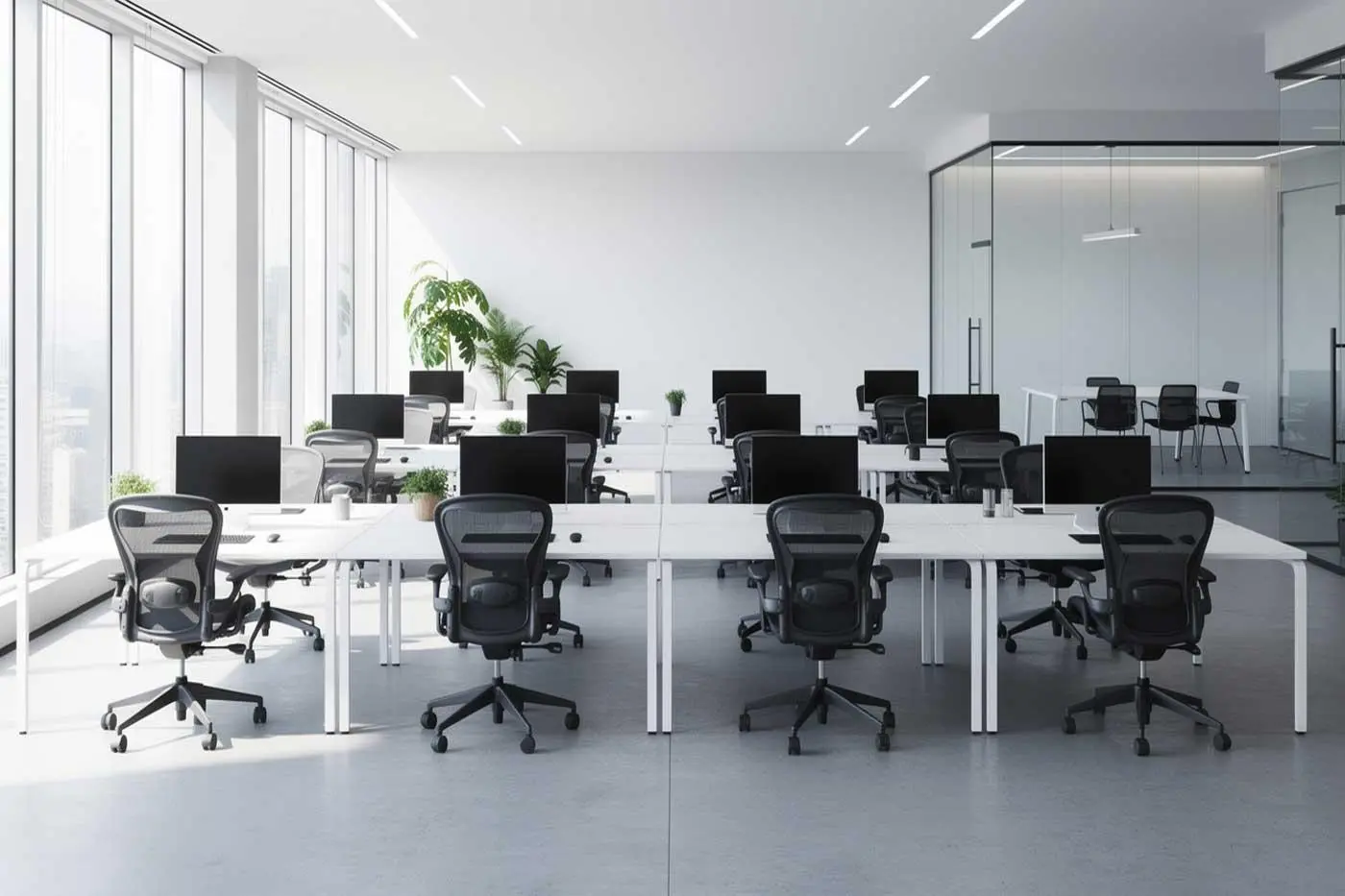
How to Reduce Office Rental Costs

How to Reduce Office Rental Costs
Office space can be one of the largest ongoing expenses for a business.
The cost is rarely limited to the advertised rent. Commercial rates, service charges, utilities, fit-out work, furniture, cleaning, internet, maintenance and end-of-lease obligations can all increase the true cost of occupying an office.
Reducing office rental costs does not necessarily mean choosing the cheapest building available.
A lower-priced office in the wrong location, with an inefficient layout or expensive operating costs, can ultimately cost more than a well-designed office with a higher headline rent.
The objective should be to secure the right amount of space, in a suitable location, under an agreement that supports the company’s current needs and future plans.
At Ping Offices, we help businesses compare serviced offices, managed workspaces, traditional leases and subleases across Dublin and Ireland. By comparing the complete cost rather than the advertised price alone, companies can often identify meaningful savings without compromising the quality of their workplace.
The Short Answer
Businesses can reduce office rental costs by:
• Taking only the space they genuinely need
• Designing the office around hybrid attendance
• Comparing several locations
• Negotiating the rent and contract terms
• Choosing a fitted office
• Avoiding unnecessary fit-out expenditure
• Checking what is included in the price
• Comparing serviced, managed and traditional offices
• Reviewing commercial rates and service charges
• Using shared meeting rooms and amenities
• Negotiating rent-free periods or other incentives
• Avoiding excessive deposits and guarantees
• Securing expansion or contraction options
• Understanding end-of-contract costs
• Starting the office search early
The greatest savings usually come from selecting the correct office structure rather than negotiating a small reduction in the headline rent.
Calculate the Total Occupancy Cost
The first step is to understand what the office will actually cost.
A low headline rent can become expensive once every additional payment is included.
Depending on the office type, the total cost may include:
• Rent or licence fee
• Commercial rates
• Service charges
• Utilities
• Building insurance
• Internet
• Cleaning
• Security
• Waste collection
• Repairs and maintenance
• Facilities management
• Furniture
• Fit-out work
• Meeting-room charges
• Parking
• Legal fees
• Surveys
• Stamp Duty
• Rent deposits
• Personal or company guarantees
• Reinstatement costs
• Dilapidations
• Moving expenses
• Annual price increases
Two offices with similar advertised prices may have very different total costs.
A serviced office may appear more expensive per desk, but its fee may include furniture, internet, utilities, commercial rates, cleaning and shared facilities.
A traditional lease may have a lower headline rent but require a significant investment before the company can move in.
Every office should therefore be compared over the same expected period of occupation.
Take the Right Amount of Space
One of the most effective ways to reduce office costs is to avoid renting unnecessary space.
Businesses sometimes choose offices based on ambitious growth projections rather than realistic requirements. This can leave them paying for empty desks and unused rooms for several years.
Before beginning the search, establish:
• The current number of employees
• The number of people attending each day
• Peak office attendance
• Expected recruitment
• Hybrid-working arrangements
• Meeting-room demand
• Storage requirements
• Visitor numbers
• Private-office requirements
• Breakout-space needs
• Accessibility requirements
• Specialist facilities
A business with 50 employees may not require 50 permanent desks if employees attend on different days.
However, it would be a mistake to take an office that accommodates only 25 people if almost the entire team attends every Tuesday and Wednesday.
The office should be sized around genuine peak demand rather than total headcount or average attendance alone.
Use Hybrid Working to Reduce the Desk Requirement
Hybrid working can allow a company to occupy a smaller office.
Instead of providing a permanently assigned desk for every employee, the business may use a combination of:
• Shared desks
• Team neighbourhoods
• Desk-booking systems
• Collaboration areas
• Quiet working zones
• Phone booths
• Shared meeting rooms
• Flexible attendance schedules
This can reduce the amount of space required without reducing the total number of employees supported by the office.
The arrangement must still be practical.
If everyone chooses to attend on the same days, the company may experience overcrowding, meeting-room shortages and employee frustration.
Before reducing desk numbers, review:
• Attendance patterns by day
• Department schedules
• Peak occupancy
• Frequency of client meetings
• Number of video calls
• Demand for quiet rooms
• Employee preferences
• Future recruitment plans
A properly planned hybrid office can lower the cost per employee while improving the quality of the workplace.
Compare Cost Per Desk and Cost Per Employee
Rent per square foot is useful when comparing traditional offices, but it does not always reveal which option offers the best value.
Businesses should also compare the cost per usable desk.
This calculation should include:
• Rent
• Commercial rates
• Service charges
• Utilities
• Internet
• Cleaning
• Insurance
• Furniture
• Fit-out costs
• Maintenance
• Facilities management
• Meeting rooms
• Expected annual increases
• Exit costs
The total cost can then be divided by the number of desks the office can comfortably accommodate.
For hybrid teams, cost per employee may be an even more useful measure.
A 30-desk office supporting 50 employees may provide better value than a cheaper 45-desk office supporting the same team.
The comparison should always use realistic capacity. An office should not be considered efficient simply because an excessive number of desks can be fitted into it.
Consider a Smaller Office with Shared Facilities
Businesses can reduce their private office requirement by using shared building amenities.
Instead of paying for dedicated facilities that remain unused for much of the week, the company may choose a building offering:
• Shared meeting rooms
• Boardrooms
• Phone booths
• Breakout areas
• Kitchens
• Event spaces
• Reception services
• Wellness rooms
• Showers and changing facilities
• Bicycle storage
• Business lounges
• Training rooms
A company may only use a large boardroom twice each month. Including one inside its private office means paying for that space every day.
Taking a smaller private suite with access to shared meeting rooms may substantially reduce the overall requirement.
The business should check whether shared facilities are included in the price, subject to credits or charged separately.
Compare Different Office Types
The most cost-effective office structure depends on the company’s size, budget and expected occupation period.
The main options include:
• Serviced offices
• Managed offices
• Traditional leases
• Subleases
• Coworking memberships
• Private own-door offices
Each option has a different cost structure.
A serviced office may suit a smaller company that wants furniture, internet and utilities included.
A managed office may suit a growing business that wants a private branded environment without funding and managing the fit-out.
A traditional lease may become more economical for a larger, established company occupying the space for several years.
A sublease can provide access to an already fitted office, sometimes at an attractive cost, but the remaining lease term and legal arrangements must be reviewed carefully.
Businesses should compare the complete package rather than assuming one office type is always cheaper.
Consider a Serviced Office
Serviced offices combine the private workspace and many operating costs into one regular payment.
The fee may include:
• Furniture
• Internet
• Utilities
• Commercial rates
• Service charges
• Cleaning
• Reception services
• Security
• Maintenance
• Kitchen facilities
• Tea and coffee
• Shared meeting rooms
• Breakout areas
• Building management
This structure can reduce upfront expenditure and make budgeting simpler.
A serviced office may be particularly cost-effective when the company:
• Has a small team
• Needs to move quickly
• Wants a shorter commitment
• Has an uncertain headcount
• Requires a professional address
• Wants access to shared meeting rooms
• Does not want to manage suppliers
• Is entering Ireland for the first time
Not every service is necessarily included. Companies should ask about meeting-room charges, printing, parking, additional internet requirements, storage and after-hours services.
Consider a Managed Office
A managed office provides a dedicated workspace that is prepared and operated for the occupier.
The provider may design, furnish and manage the office, with most costs included in one payment.
A managed office may include:
• A private company suite
• An entire floor
• Dedicated meeting rooms
• A private kitchen
• Furniture
• Internet
• Utilities
• Cleaning
• Maintenance
• Facilities management
• Access control
• Branding
• Shared building amenities
This can reduce the initial capital required for fit-out and remove the need to manage several office suppliers.
Managed offices can be particularly attractive to businesses that want greater privacy and identity than a standard serviced office but do not want the responsibilities of a traditional lease.
The agreement should clearly explain what is included, how prices may increase and what happens if the company requires more or less space.
Review Fitted Sublease Opportunities
A fitted sublease can provide significant savings.
Another company may have more space than it requires or may be leaving its office before the end of its lease. It may therefore offer some or all of the premises to another occupier.
A fitted sublease may include:
• Desks and chairs
• Meeting rooms
• Kitchens
• Cabling
• Internet infrastructure
• Reception areas
• Breakout spaces
• Storage
• Access-control systems
• Existing branding opportunities
The incoming business can avoid much of the cost and delay associated with fitting out an empty office.
Potential disadvantages include:
• A limited remaining term
• Less flexibility to alter the space
• Dependence on the original tenant
• Restrictions in the main lease
• Shared facilities or access
• Limited expansion options
• Furniture that does not match the requirement
The legal structure, landlord consent and responsibility for costs should be confirmed before proceeding.
Avoid Unnecessary Fit-Out Costs
Office fit-outs can involve substantial expenditure.
Typical fit-out items include:
• Internal partitions
• Meeting rooms
• Kitchens
• Flooring
• Lighting
• Furniture
• Electrical work
• Cabling
• Internet infrastructure
• Heating and cooling adjustments
• Fire-safety work
• Acoustic treatment
• Reception areas
• Access control
• Signage
• Showers and changing rooms
A business can reduce these costs by choosing an office that is already close to its required layout.
An existing fitted office may not be perfect, but minor changes are generally less expensive than starting with an empty floor.
Before committing to a major fit-out, consider:
• How long the company expects to stay
• Whether the layout can support growth
• Which alterations are genuinely necessary
• Whether furniture can be reused
• Whether the landlord will contribute
• Whether reinstatement will be required
• Whether a managed office would be more economical
Fit-out decisions should support the operation of the business rather than being driven entirely by appearance.
Reuse Existing Furniture
Furniture can add considerably to the cost of a move.
Before purchasing new furniture, review what can be reused from the current office.
This may include:
• Desks
• Task chairs
• Meeting tables
• Storage units
• Reception furniture
• Screens
• Acoustic panels
• Kitchen equipment
• Phone booths
Existing furniture can sometimes be reconfigured to suit the new layout.
Businesses may also consider:
• Purchasing high-quality used furniture
• Negotiating to retain furniture already in the office
• Leasing furniture
• Including furniture in a managed-office agreement
• Selling furniture that is no longer required
The cost of moving, storing and installing old furniture should be compared with the price of replacement.
Negotiate the Headline Rent
The advertised rent is not always the final rent.
The amount of flexibility will depend on market conditions, the building, the landlord, the length of commitment and the strength of the proposed tenant.
A business may negotiate:
• A lower rent
• A stepped rent
• A fixed initial period
• A cap on increases
• A favourable rent-review structure
• A smaller deposit
• Reduced meeting-room charges
• Included parking
• Additional storage
• Furniture
• Better expansion rights
• A contribution towards fit-out
Negotiation should focus on the complete commercial package.
A small reduction in rent may be less valuable than a rent-free period, fitted office or flexible break option.
Ask for a Rent-Free Period
Landlords may offer a rent-free period as an incentive for a tenant to enter a lease.
This can help offset:
• Fit-out costs
• Furniture purchases
• Moving expenses
• Legal fees
• Overlapping rent
• Initial setup costs
The value of the rent-free period should be calculated across the complete lease term.
Businesses should also confirm whether commercial rates, service charges and utilities remain payable during the rent-free period.
A longer commitment may produce a stronger incentive, but the company should not accept an unsuitable lease simply to receive additional rent-free time.
Negotiate a Fit-Out Contribution
A landlord may contribute towards the cost of preparing the office.
This contribution might be provided through:
• A direct financial payment
• Completion of agreed works
• A rent-free period
• Furniture
• Upgraded building services
• Installation of showers or bicycle facilities
• Electrical or mechanical improvements
• Delivery of the office to an agreed specification
The works and responsibilities should be clearly documented.
The company should establish:
• Who controls the contractors
• When the work will be completed
• What specification will be delivered
• Who pays for any cost overruns
• Whether VAT applies
• What happens if the work is delayed
• Whether reinstatement will be required later
A landlord contribution can reduce upfront costs, but it should not replace proper investigation of the building’s condition.
Negotiate the Deposit and Guarantee
A large rent deposit can tie up working capital.
Depending on the agreement and the financial strength of the tenant, it may be possible to negotiate:
• A smaller deposit
• A deposit that reduces over time
• A capped company guarantee
• A limited parent-company guarantee
• A bank guarantee
• Monthly payments rather than quarterly payments
• A review after the company establishes a payment history
A lower deposit does not reduce the stated rent, but it can improve cash flow and allow the business to use its capital elsewhere.
The company should obtain legal and financial advice before accepting significant guarantee obligations.
Secure a Break Option
A break option can allow the business to leave the office before the end of the full lease term.
This may not reduce the immediate rent, but it can protect the company from paying for unsuitable space if its circumstances change.
A break option can be valuable when:
• Headcount is uncertain
• The company is growing quickly
• Hybrid-working patterns are evolving
• The business is entering a new market
• A relocation may be required
• The company’s funding position may change
The break conditions must be reviewed carefully.
The tenant may be required to:
• Give notice by a specific date
• Pay all rent and other sums due
• Return the office in a particular condition
• Comply with lease obligations
• Remove alterations
• Provide vacant possession
A break option is only useful if it can be exercised successfully.
Avoid Taking a Lease That Is Too Long
A longer lease may produce a lower rent or stronger incentive, but it also creates a larger commitment.
If the company outgrows the office, reduces its headcount or changes its working model, it may remain responsible for the rent.
Before accepting a long lease, consider:
• Headcount projections
• Revenue stability
• Funding plans
• Hybrid-working policies
• Expansion requirements
• Possible mergers or acquisitions
• Geographic plans
• The ability to assign or sublet
• Break options
• Future building suitability
Flexibility has a financial value.
A slightly higher rent under a more flexible agreement may be less expensive than being trapped in an unsuitable office.
Negotiate Expansion and Contraction Rights
A business can reduce future relocation costs by choosing a building that allows it to change its space.
Possible arrangements include:
• First refusal on adjoining offices
• Priority access to larger suites
• The ability to add individual offices
• Expansion within the same provider’s portfolio
• The right to surrender part of the space
• Temporary project rooms
• Flexible coworking memberships
• Additional desks on short notice
Expansion rights can help the company avoid taking excess space from the beginning.
Contraction options may reduce the risk of continuing to pay for unused areas if the team becomes smaller.
These rights should be documented rather than based on informal assurances.
Review the Service Charge Carefully
Service charges can add substantially to the cost of a traditional office.
They may cover:
• Common-area cleaning
• Security
• Reception services
• Lifts
• Building insurance
• Shared lighting and heating
• Landscaping
• Waste services
• Repairs to common areas
• Property management
• Sinking-fund contributions
Before committing, request:
• The current service-charge budget
• Previous service-charge accounts
• Details of how costs are allocated
• Information about planned major works
• Details of sinking-fund contributions
• An explanation of any unusual increases
• Confirmation of excluded services
The lease should explain which costs can be recovered from the tenant.
Businesses should be cautious where the service charge is based only on an estimate or where major building works are expected.
Check the Commercial Rates
Commercial rates are an important part of office occupancy costs.
Businesses should confirm:
• The annual rates liability
• Whether rates are included in the quoted price
• Whether the amount is estimated or confirmed
• Who is responsible for payment
• Whether the property has been divided correctly
• Whether any outstanding liability exists
• How the rates affect the total cost per desk
Rates are commonly included in serviced and managed-office fees but are usually an additional cost under a traditional lease.
The exact treatment should always be confirmed before comparing offices.
Reduce Utility and Energy Costs
Energy-efficient offices may cost less to operate.
When viewing a building, consider:
• Heating and cooling systems
• Window quality
• Insulation
• Lighting
• Energy controls
• Occupancy sensors
• Natural daylight
• Building energy performance
• Shared energy costs
• Hours of operation
• Additional charges for after-hours use
A cheaper older building may require more energy to heat or cool.
Businesses can also reduce consumption through:
• LED lighting
• Zoned heating and cooling
• Automatic lighting controls
• Energy-efficient equipment
• Clear shutdown procedures
• Monitoring energy use
• Reducing unnecessary after-hours operation
The company should determine whether utilities are metered separately, divided among occupiers or included in a fixed fee.
Review Meeting-Room Usage
Many companies rent more space than they need because they want dedicated meeting rooms.
Before including several meeting rooms inside the office, examine:
• How frequently meetings occur
• Typical meeting sizes
• Client-visitor numbers
• Whether meetings are internal or external
• How many meetings take place simultaneously
• Whether shared rooms are available
• Whether external venues would be cheaper
A serviced or managed building with bookable meeting rooms may allow the company to take a smaller private office.
However, frequent additional charges can become expensive.
The business should compare the cost of renting private meeting-room space every day with the cost of booking shared rooms when required.
Reduce Parking Costs
Parking can be expensive, particularly in central Dublin.
Businesses can reduce parking-related costs by:
• Taking fewer dedicated spaces
• Using public car parks only when required
• Providing spaces for essential users
• Introducing shared parking arrangements
• Supporting public-transport travel
• Using park-and-ride services
• Providing bicycle facilities
• Choosing a building close to DART, Luas or bus routes
• Negotiating parking into the rental package
The lowest-rent location may create higher travel and parking expenses.
Transport costs should therefore be considered as part of the complete workplace decision.
Compare Locations
Moving a short distance can sometimes produce substantial savings.
Businesses should compare:
• Prime city-centre locations
• City-fringe areas
• Alternative Dublin postal districts
• Suburban business districts
• Offices near transport hubs
• Regional locations
• Buildings just outside the preferred area
The comparison should include more than rent.
Consider:
• Employee commuting times
• Public-transport connections
• Client access
• Parking
• Local amenities
• Recruitment requirements
• Building quality
• Space efficiency
• Brand perception
• Total occupancy cost
An office just outside a premium district may provide almost the same accessibility at a lower cost.
However, moving too far from employees or clients can create recruitment, retention and productivity costs.
Consider Offices Outside Dublin 2
Dublin 2 is an important and prestigious office location, but not every business needs to pay its premium.
Depending on the company’s requirements, alternatives may include:
• Dublin 1
• Dublin 4
• Dublin 7
• Dublin 8
• Ballsbridge
• Sandyford
• Blackrock
• Dundrum
• Dublin Airport
• Swords
• City-fringe locations
• Regional business centres
A company may find a larger or better-equipped office in another location for the same overall budget.
The correct alternative will depend on where employees live, where clients are based and how frequently the office is used.
Improve Space Efficiency
Two offices of the same size can accommodate very different numbers of employees.
Space efficiency can be affected by:
• Floor shape
• Structural columns
• Corridors
• Staircases
• Toilets
• Fixed partitions
• Window positions
• Ceiling height
• Heating and cooling equipment
• Fire exits
• Accessibility requirements
• Cellular rooms
A modern open floor plate may accommodate more employees than an older building with the same floor area.
Before comparing prices, create a test layout showing:
• Desks
• Meeting rooms
• Phone booths
• Kitchens
• Storage
• Breakout areas
• Circulation routes
• Accessible facilities
• Future growth space
The most economical office is often the one that uses its floor area most effectively.
Start the Office Search Early
A rushed office search weakens the company’s negotiating position.
If the current lease is about to expire, the business may have to accept:
• A higher price
• An unsuitable location
• Too much or too little space
• Unfavourable contract terms
• Expensive temporary accommodation
• Overlapping rent
• A rushed fit-out
Starting early provides time to:
• Compare more options
• Negotiate properly
• Review legal documents
• Plan the fit-out
• Arrange furniture and technology
• Assess employee travel
• Explore subleases
• Negotiate with the existing landlord
• Coordinate the move
• Walk away from unsuitable offers
The appropriate search period will depend on the size and complexity of the requirement. Larger offices and bespoke fit-outs generally require more preparation.
Review the Existing Lease Before Moving
Moving is not always the cheapest option.
Before relocating, consider whether the current office can be made more cost-effective.
Possible options include:
• Renegotiating the rent
• Exercising a break option
• Surrendering part of the space
• Subletting unused space
• Reconfiguring the layout
• Introducing hybrid working
• Sharing meeting rooms
• Removing unused storage
• Negotiating revised service terms
• Extending the lease in exchange for better terms
The company should compare the cost of remaining with the complete cost of moving.
A new office may involve legal fees, fit-out costs, moving expenses, deposits and operational disruption.
Sublet Unused Space
A company with excess office capacity may consider subletting part of its premises.
This can generate income and reduce the effective cost of the office.
Before proceeding, review:
• The existing lease
• Landlord consent requirements
• Planning and permitted use
• Insurance
• Fire safety
• Access and security
• Shared facilities
• Commercial rates
• Service charges
• Data protection
• Confidentiality
• Legal agreements
• Management responsibilities
A poorly planned sublease can disrupt the workplace and create additional responsibilities.
The company should obtain legal advice and ensure the proposed arrangement is permitted.
Renegotiate at the Right Time
Lease events can create opportunities to reduce costs.
These may include:
• Lease expiry
• Break dates
• Rent reviews
• Expansion discussions
• Contraction requirements
• Building refurbishment
• Changes in market conditions
• Changes in the tenant’s financial position
The company should begin preparing well before an important lease date.
This allows it to assess alternatives and negotiate from an informed position.
A landlord is more likely to take a proposal seriously when the tenant has realistic alternative options.
Avoid Overlapping Rent
Businesses can sometimes end up paying for two offices during a move.
Overlap may be necessary to allow fit-out work and a controlled relocation, but it should be planned carefully.
The company may reduce overlap by:
• Negotiating early access to the new office
• Agreeing a delayed rent commencement
• Coordinating fit-out completion
• Negotiating a surrender of the existing lease
• Using a ready-to-occupy office
• Moving furniture in phases
• Choosing a managed or serviced office
• Aligning the new agreement with the existing expiry date
A long overlap can remove much of the saving achieved through rent negotiations.
Understand Reinstatement and Dilapidations
The cost of leaving an office can be significant.
A traditional lease may require the tenant to:
• Remove partitions
• Remove branding
• Repair damage
• Replace finishes
• Remove cabling
• Restore altered layouts
• Decorate the premises
• Return the property to a specified condition
These obligations are often described as reinstatement or dilapidations.
Before signing a lease, businesses should understand:
• The required condition at expiry
• Which alterations must be removed
• Whether a schedule of condition can be agreed
• Whether liability can be capped
• Whether the landlord will accept the fit-out
• How much should be budgeted for exit works
A cheaper office can become expensive if it creates a substantial liability when the company leaves.
Avoid Paying for Unused Services
Serviced and managed offices may include a wide range of facilities.
These can offer excellent value when they are used regularly.
However, a company should consider whether it genuinely needs:
• Unlimited meeting rooms
• Event space
• Premium refreshments
• Reception services
• Postal handling
• Printing packages
• Dedicated bandwidth
• Parking
• Storage
• Multiple access cards
• After-hours air conditioning
• Additional cleaning
Ask whether services can be removed, reduced or purchased only when required.
The best package is not necessarily the one with the most amenities. It is the one that matches how the company actually operates.
Protect Against Annual Increases
Office costs may increase during the agreement.
Depending on the office type, increases may apply to:
• Rent
• Licence fees
• Service charges
• Utilities
• Meeting rooms
• Parking
• Additional desks
• Cleaning
• Internet services
• Storage
Businesses should ask:
• How often can the price increase?
• Is the increase fixed or linked to an index?
• Is there a minimum increase?
• Is there a maximum increase?
• Can service charges increase separately?
• What happens at renewal?
• Will incentives disappear after the first year?
A low introductory rate may not represent good value if it increases substantially after a short period.
Use Accurate Headcount Forecasts
Businesses sometimes rent too much space because every planned hire is treated as certain.
A better forecast can separate:
• Existing employees
• Approved hires
• Probable hires
• Possible hires
• Temporary contractors
• Remote employees
• Employees who require permanent desks
• Employees who attend occasionally
The office can then be planned around the most realistic scenario.
Where future growth is uncertain, it may be more economical to secure expansion rights than to pay immediately for empty space.
Consider the Value of Flexibility
The cheapest fixed rent is not always the lowest-risk option.
A flexible agreement may cost slightly more each month but allow the company to:
• Add desks
• Reduce space
• Move within the building
• Leave earlier
• Avoid a major fit-out
• Respond to changes in headcount
• Test a new location
• Change its hybrid-working policy
The financial value of this flexibility should be included in the comparison.
A business that saves money on rent but remains liable for an unused office may ultimately spend far more.
Common Mistakes That Increase Office Costs
Businesses can avoid unnecessary expense by recognising common mistakes.
These include:
• Focusing only on headline rent
• Taking too much space
• Underestimating fit-out costs
• Ignoring commercial rates
• Failing to review service charges
• Choosing an inefficient layout
• Signing an excessively long commitment
• Relying on unrealistic growth forecasts
• Failing to negotiate incentives
• Ignoring reinstatement obligations
• Leaving the search too late
• Paying for unused facilities
• Choosing a location without examining employee commutes
• Failing to secure expansion options
• Assuming serviced offices are always expensive
• Assuming traditional leases are always cheaper
• Accepting unclear annual price increases
• Failing to obtain legal and property advice
A structured comparison can prevent these problems before the company enters an agreement.
How to Compare Office Options Properly
Create a cost comparison covering the complete expected occupation period.
For every office, include:
• Initial deposit
• Rent or monthly fee
• Commercial rates
• Service charges
• Utilities
• Insurance
• Internet
• Cleaning
• Security
• Furniture
• Fit-out
• Repairs and maintenance
• Facilities management
• Meeting-room charges
• Parking
• Legal and professional fees
• Moving costs
• Annual increases
• Reinstatement costs
• Exit costs
Then compare:
• Number of usable desks
• Cost per desk
• Cost per employee
• Contract length
• Break options
• Expansion potential
• Building facilities
• Transport connections
• Employee convenience
• Client accessibility
• Time required to move in
• Operational responsibilities
This creates a more reliable comparison than looking at monthly rent alone.
Questions to Ask Before Renting an Office
Before entering an office agreement, ask:
• What is the complete monthly cost?
• What is included in the quoted price?
• Are commercial rates included?
• Are service charges included?
• Are utilities included?
• Is the office furnished?
• What fit-out work is required?
• How many employees can the office accommodate comfortably?
• Are meeting rooms included?
• Are there additional booking charges?
• How can the price increase?
• What deposit is required?
• Is a guarantee required?
• Is there a break option?
• Can the business expand or contract?
• Can the agreement be assigned?
• Can unused space be sublet?
• Who is responsible for repairs?
• What insurance is required?
• What reinstatement obligations apply?
• What will it cost to leave?
• Is parking included?
• Are there charges for after-hours access?
• Is early access available for the move?
• What incentives can be negotiated?
Clear answers to these questions can prevent unexpected costs later.
How Ping Offices Can Help
Office prices are often presented in different ways.
A serviced office may quote a monthly price per desk. A managed office may quote one complete monthly fee. A traditional office may be advertised using an annual rent per square foot, excluding several additional costs.
This can make direct comparisons difficult.
Ping Offices can help your business:
• Define the correct office requirement
• Review desk and meeting-room needs
• Search current office availability
• Compare serviced, managed and leased offices
• Identify fitted sublease opportunities
• Compare different Dublin locations
• Arrange property viewings
• Calculate total occupancy costs
• Compare cost per desk
• Identify included and excluded services
• Review contract flexibility
• Assess expansion and contraction options
• Compare building facilities
• Identify additional or hidden costs
• Explore fitted and furnished offices
• Negotiate with landlords and office providers
• Avoid paying for unnecessary space
There is no charge to your business for using Ping Offices. We are paid by the landlord or office provider while remaining independent in how we search and compare the market.
Frequently Asked Questions
What is the best way to reduce office rental costs?
The most effective approach is usually to reduce the amount of unnecessary space and compare the complete occupancy cost of several office types. Negotiating a small rent reduction will have limited value if the business is paying for empty desks or expensive unused facilities.
Can hybrid working reduce office costs?
Yes. Hybrid working can allow a company to occupy fewer desks than its total headcount would traditionally require. The office must still accommodate peak attendance and provide sufficient meeting rooms, phone booths and collaboration space.
Are serviced offices more expensive than traditional leases?
Not always. Serviced offices can have a higher cost per desk, but the fee may include furniture, internet, utilities, commercial rates, cleaning and shared amenities. A traditional lease can require substantial additional expenditure.
Can office rent be negotiated?
It may be possible to negotiate the rent, particularly where the company is considering a longer commitment or where the landlord has several vacant offices. The scope for negotiation will depend on the building and market conditions.
What office incentives can a business negotiate?
Possible incentives include a rent-free period, fit-out contribution, reduced deposit, furniture, parking, early access, capped increases or improved break and expansion rights.
Is a fitted office cheaper?
A fitted office can reduce the amount of money required before occupation. The business should still confirm the condition of the fit-out, whether the furniture is included and what must be removed at the end of the agreement.
How can a company avoid renting too much space?
The company should examine current headcount, peak attendance, planned recruitment, meeting-room usage and hybrid-working patterns. Expansion rights may be more economical than taking surplus space immediately.
Should every employee have a permanent desk?
Not necessarily. Employees who attend on different days may be able to share desks. Permanent desks may still be required for certain roles, equipment or working arrangements.
Can shared meeting rooms reduce office costs?
Yes. Shared meeting rooms can allow the business to take a smaller private office. The company should check availability, booking rules and any additional charges.
What costs are normally additional to office rent?
Under a traditional lease, additional costs may include commercial rates, service charges, utilities, insurance, cleaning, internet, repairs, furniture, fit-out and reinstatement. The exact liability depends on the lease.
Can moving outside Dublin 2 reduce costs?
Potentially. Other Dublin locations may provide lower rents or more space for the same budget. Employee commuting, client access, public transport and building quality should also be considered.
Is it cheaper to renew an existing lease or move?
It depends on the terms available. Remaining can avoid moving and fit-out costs, while relocating may provide lower rent or more suitable space. Both options should be compared using the complete cost.
Can a company sublet unused office space?
Potentially, subject to the lease, landlord consent and legal requirements. The company should consider access, security, insurance, rates, service charges and management responsibilities.
What is a rent-free period?
A rent-free period is an agreed period during which the tenant does not pay the headline rent. Other costs, including commercial rates and service charges, may still be payable.
How does a break option save money?
A break option can allow the business to leave before the full lease expires. This can prevent the company from paying for an unsuitable office if its headcount or circumstances change.
How early should a business begin searching for an office?
The timing depends on the size and complexity of the move. Starting early provides more time to compare options, negotiate terms, review legal documents and complete any required fit-out.
Can Ping Offices help negotiate office costs?
Yes. Ping Offices can compare available offices, clarify what each price includes, arrange viewings and negotiate with landlords and office providers on behalf of the business.
Final Thoughts
Reducing office rental costs is not simply about finding the lowest advertised rent.
The largest savings often come from taking the correct amount of space, using the office efficiently and choosing an agreement that matches the company’s future plans.
A smaller office with shared meeting rooms may provide better value than a larger conventional property. A serviced or managed office may cost less overall once fit-out, furniture and operating expenses are included. A fitted sublease may allow the company to avoid substantial setup costs.
Businesses should also examine the financial value of flexibility.
An office that can accommodate growth, provide a break option or allow the company to reduce its space may protect the business from much greater costs later.
Every comparison should include rent, commercial rates, service charges, utilities, fit-out, furniture, maintenance, contract increases and exit obligations.
If you are looking to reduce your office costs, Ping Offices can compare serviced, managed and leased offices across Dublin and Ireland, identify suitable fitted options and help you secure a workspace that meets your operational needs without unnecessary expense.
News insight
 Oct 08, 2026
Dublin Office Space with Bike Storage and Showers: What to Check
A practical guide to choosing a Dublin office that works for people who cycle, from secure bike stor...
 Oct 06, 2026
Office Space with Meeting Rooms in Dublin: What to Check Before Signing
Need a Dublin office with meeting rooms? Learn how to compare dedicated and bookable rooms, real ava...
 Sep 29, 2026
Office Space with Parking in Dublin
Looking for office space with parking in Dublin? Learn what to check about spaces, costs, visitor ac...
Thanks! We've got your request.
Our team will review your details and be in touch shortly with your personalised quote.