
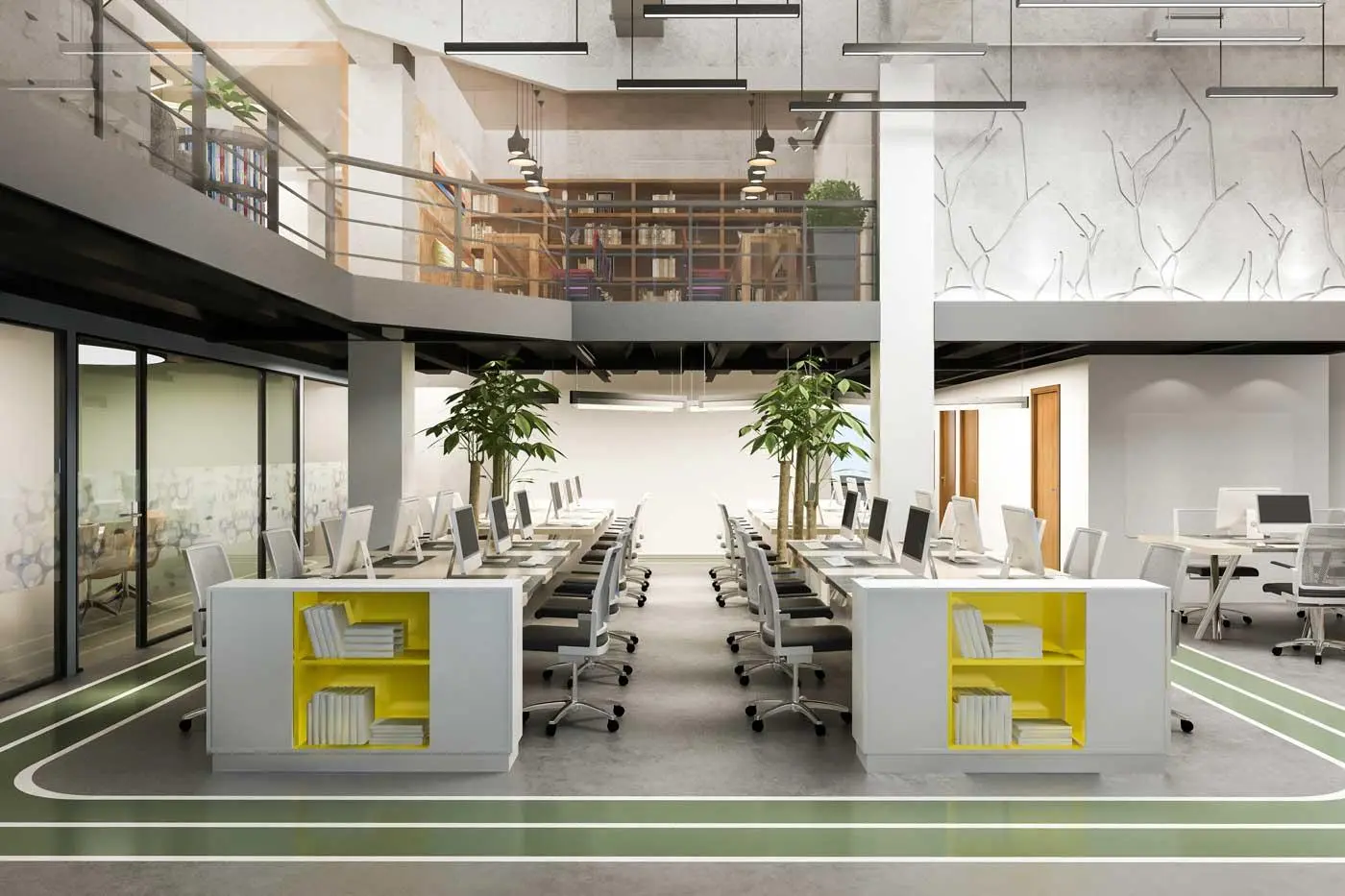
Flexible Office vs Long-Term Lease in Dublin: Which Is Right for Your Business?

Flexible Office vs Long-Term Lease in Dublin: Which Is Right for Your Business?
Choosing between a flexible office and a traditional office lease in Dublin is one of the most important property decisions a business can make.
It affects far more than your monthly office cost.
The decision determines how much capital you need upfront, how quickly you can move, how easily you can grow or reduce your office footprint, how much responsibility you take on for managing the workplace and how exposed the business is if its plans change.
For many companies, the mistake is comparing the monthly price of a serviced or managed office with the headline rent on a traditional lease.
That is not a true comparison.
A flexible office price will often include furniture, fit-out, internet, utilities, cleaning and building services within one monthly fee.
A traditional office rent usually needs to be considered alongside commercial rates, service charges, fit-out, furniture, utilities, internet, cleaning, insurance, maintenance and potential end-of-lease costs.
The real question is therefore not simply:
Is a flexible office or a lease cheaper?
It is:
Which option provides the best total cost, flexibility and risk profile for your business?
This guide explains the difference between flexible office space and traditional office leases in Dublin, including serviced offices, managed offices, costs, agreement lengths, fit-out, flexibility and when each option makes commercial sense.
Quick Answers: Flexible Office vs Traditional Lease
What is a flexible office?
A flexible office is workspace that can usually be occupied on shorter and more adaptable commercial terms than a traditional lease.
Flexible workspace includes serviced offices, private office suites, coworking space, managed offices and some self-contained or own-door office solutions.
Furniture, internet, utilities, cleaning and other services are often included within the monthly cost.
What is a serviced office?
A serviced office is a furnished private office within a professionally managed building.
Businesses normally have their own private office while sharing facilities such as reception, meeting rooms, kitchens, breakout areas and phone booths.
Serviced offices are generally designed to allow businesses to move in quickly with minimal upfront investment.
What is a managed office?
A managed office provides a business with a more private or customised workspace while a third party manages much of the property operation.
Managed offices can include dedicated meeting rooms, kitchens, branding, furniture and bespoke layouts.
They can be particularly attractive to companies that want the feel of their own headquarters without taking responsibility for every element of a traditional lease.
What is a traditional office lease?
Under a traditional commercial office lease, a business takes space directly from a landlord for an agreed term.
The occupier generally has greater control over the office but also takes on more responsibility for the property, its operating costs and the obligations contained within the lease.
Is a flexible office more expensive than a lease?
Not necessarily.
The headline monthly price can be higher, but a proper comparison needs to include the complete cost of occupying a leased office.
For smaller and growing businesses, the lack of significant upfront fit-out and furniture expenditure can make flexible offices particularly attractive.
For larger businesses with stable long-term requirements, a traditional lease can become more cost-effective over a sufficiently long period.
What Is Flexible Office Space in Dublin?
Flexible office space has developed significantly beyond traditional coworking.
A company looking for flexible office space in Dublin can now choose from everything from a two-person private office to an entire managed floor or self-contained headquarters.
This means flexible workspace can suit:
Early-stage businesses needing their first office, established SMEs, international companies opening a Dublin operation, project teams requiring temporary accommodation, businesses between long-term offices and larger organisations wanting greater flexibility within their property portfolio.
The defining feature is not necessarily the size or appearance of the office.
It is the commercial structure.
Flexible offices generally allow a business to occupy workspace without taking on the same level of capital investment and long-term property commitment associated with a conventional lease.
How Does a Flexible Office Work?
The exact structure varies between office providers and buildings.
In a typical serviced office, a business pays one monthly licence fee for a furnished private office.
That fee may include electricity, heating, internet, cleaning, reception, building maintenance and access to shared amenities.
Meeting room usage, printing, parking and certain additional services may be charged separately.
A managed office typically provides greater privacy and customisation.
Instead of taking several private offices within a shared centre, a business may occupy an entire floor or self-contained area designed around its requirements.
The provider manages the office while the occupier pays an agreed monthly amount.
For businesses comparing flexible office space in Dublin, it is important to establish exactly what is included rather than assuming every flexible office operates on an identical all-inclusive basis.
What Is a Traditional Office Lease?
A traditional lease gives the occupier greater control over its office space.
The business agrees terms with the landlord and occupies the property for the agreed lease period, subject to the terms of the lease.
For some businesses, this provides exactly the stability and control they require.
A company can potentially design the office around its own culture, technology, meeting requirements and working practices.
However, taking a lease is not simply a property rental decision.
The occupier may need to manage or pay separately for many elements that would otherwise be included within a flexible workspace agreement.
These can include commercial rates, building service charges, utilities, internet connectivity, cleaning, furniture, office management, insurance and repairs.
The office may also require substantial fit-out work before employees can use it.
This is why comparing only the headline rent with a serviced-office monthly fee gives an incomplete picture.
Serviced Office vs Managed Office vs Traditional Lease
These three models effectively provide different balances between flexibility, control and responsibility.
A serviced office generally provides the greatest simplicity.
The space is already fitted and furnished, and businesses can normally move in quickly.
A managed office provides more control and privacy while retaining much of the operational convenience associated with flexible workspace.
A traditional lease generally provides the greatest degree of control, but the business assumes more property responsibility and usually needs greater certainty about its future requirements.
There is no point at which a business automatically becomes “too large” for flexible office space or “big enough” for a lease.
The decision should be based on what the company actually needs.
The Real Cost of a Flexible Office
Flexible office pricing is usually relatively easy to understand.
A business may receive a monthly price for an office accommodating a specific number of people.
Depending on the agreement, that price may cover the majority of the costs involved in operating the workspace.
For example, the monthly payment might include the office itself, desks and chairs, electricity, heating, internet, cleaning, reception, kitchens, communal areas and building management.
This makes financial planning relatively straightforward.
The business can often calculate its office cost without having to manage multiple suppliers and separate invoices.
However, businesses should still confirm additional charges.
Meeting rooms, parking, printing, dedicated internet connections, additional access cards and certain services may fall outside the standard monthly fee.
The objective should be to establish the genuine all-in monthly cost before agreeing terms.
The Real Cost of a Traditional Office Lease
Traditional office pricing is more complicated.
The headline rent is only the starting point.
A leased office can involve the rent itself together with commercial rates, service charges, electricity, heating, internet, cleaning, insurance, furniture, IT infrastructure, office management and repairs.
There is then the upfront cost of creating the office.
Depending on the condition in which the space is delivered, a company may need to install meeting rooms, kitchens, flooring, lighting, data cabling, furniture, acoustic treatments, branding and other elements before employees can move in.
Professional costs may also arise during acquisition and fit-out.
At the end of the lease, the business may have reinstatement or dilapidation obligations depending on the agreement.
That does not make leasing a bad option.
It simply means a meaningful financial comparison should include the entire property lifecycle rather than the rent alone.
Why Upfront Capital Matters
This is one of the biggest differences between flexible offices and leases.
A flexible workspace is generally designed to minimise the amount of capital required before occupation.
The desks are already there.
The internet is connected.
The meeting rooms exist.
The office can often be used almost immediately.
A traditional office may require the company to invest significant capital before a single employee sits at a desk.
That money has an opportunity cost.
For a growing business, €100,000 invested into creating an office is €100,000 that cannot simultaneously be invested in recruitment, technology, marketing or working capital.
For a highly profitable and established organisation, that may not be a major concern.
For an early-stage or rapidly growing company, it can materially affect the decision.
Which Is Faster to Move Into?
Flexible offices generally have a significant advantage in speed.
Many are already furnished and operational.
Once commercial terms and paperwork are agreed, occupation can sometimes happen quickly.
Traditional leased offices can take considerably longer.
A business may need to complete negotiations, legal documentation, design work, fit-out, furniture procurement, IT installation and other work before moving in.
However, not every leased office requires a lengthy fit-out.
Dublin increasingly contains fitted and landlord-delivered office space that can significantly reduce the traditional move-in process.
The important question is therefore not simply whether a property is leased or flexible.
Ask:
What condition is this particular office being delivered in, and what needs to happen before our team can move in?
Flexible Office Agreements: How Long Do You Need to Commit?
One of the principal advantages of flexible office space is that agreement terms can be shorter than traditional property commitments.
The exact term varies widely.
Some businesses require temporary workspace for a matter of months.
Others negotiate 12, 24 or 36-month agreements in return for stronger commercial terms.
Managed office agreements often involve longer commitments because the provider may be investing in a customised workspace for the occupier.
The greater the investment required to create the office, the more likely a longer commitment will be required.
Businesses therefore need to balance flexibility against price.
A very short agreement may provide maximum freedom but come at a higher effective monthly cost.
A longer agreement can improve pricing but reduces the company's ability to change direction.
How Long Is a Traditional Office Lease in Dublin?
There is no universal lease length.
Lease terms are negotiated between landlord and tenant and depend on the property, size of requirement, condition of the office and commercial position of both parties.
Larger corporate occupiers may be comfortable making substantial multi-year commitments.
Smaller businesses may seek shorter leases, break options or fitted office solutions that reduce their exposure.
The important point is that businesses should not consider only the lease expiry date.
They should understand:
When can we actually exit?
A break option midway through a longer lease can materially change the risk profile.
The conditions attached to that break option also matter.
These are areas where occupiers should obtain appropriate property and legal advice before signing.
Which Is Better for a Growing Business?
For many growing companies, certainty is the biggest challenge.
A 10-person business today may have 18 employees next year.
Or 30.
Or still have 10.
Forecasting property requirements several years ahead can therefore be difficult.
Flexible offices reduce the cost of being wrong.
If additional space becomes available within the building or provider's portfolio, a company may be able to expand without undertaking a completely new office acquisition.
Likewise, a shorter agreement can reduce exposure if growth does not happen as expected.
This makes flexibility particularly valuable for:
Technology companies, startups, recruitment businesses, international entrants, project teams and other organisations where headcount can change quickly.
The key point is not that every growing company should choose a flexible office.
It is that uncertain headcount increases the financial value of flexibility.
When Does a Traditional Lease Make More Sense?
A traditional lease becomes more attractive when the business has greater certainty.
Imagine a company with a stable workforce, predictable office attendance and a strong expectation that it will remain in the same location for several years.
The company may be willing to invest in fit-out because that investment can be spread across a longer period.
It may also want complete control over:
Office design, branding, security, meeting rooms, technology, employee facilities and access.
At sufficient scale and over a sufficiently long period, the economics of a lease can become attractive.
The important phrase is over a sufficiently long period.
An expensive fit-out becomes easier to justify when it is used for many years.
The same investment is difficult to justify if the company might relocate after 18 months.
Is There a Headcount Where Leasing Automatically Becomes Better?
No.
This is one of the most common oversimplifications in office property.
A 20-person company with stable headcount and a five-year plan may be a perfectly sensible lease occupier.
A 100-person international company launching a new operation with uncertain future headcount may prefer managed or flexible space.
Headcount matters, but certainty matters more.
A better decision framework considers:
How predictable is our team size? How long are we confident we will need this office? How much capital are we willing to invest? How much operational responsibility do we want?
Those questions provide a much better answer than an arbitrary employee threshold.
How Hybrid Working Changes the Calculation
Hybrid working has made flexible office strategy even more important.
Historically, companies often calculated property requirements based on one permanent desk for every employee.
That is no longer appropriate for every business.
A company with 50 employees may only have 30 or 35 people attending on a typical day.
That can reduce the required office footprint.
However, hybrid workplaces may require more collaboration space, meeting rooms, phone booths and informal areas.
Businesses therefore need to understand peak office attendance, not just total headcount.
Flexible and managed offices can allow companies to test these working patterns before making a longer-term property commitment.
What Happens if Your Business Grows Faster Than Expected?
This question should be asked before signing any office agreement.
In a flexible office, ask whether larger suites or additional offices are available within the building.
Ask whether you can move elsewhere within the provider's portfolio.
In a managed office, establish whether adjoining space or additional floors could become available.
In a traditional lease, consider whether expansion rights, additional available space or other arrangements can be negotiated.
A cheap office that cannot accommodate the business 12 months later may prove extremely expensive once relocation costs and disruption are included.
What Happens if Your Business Shrinks?
This is the other side of the equation.
Businesses naturally plan for growth.
Property decisions also need to consider downside scenarios.
If a 40-person company signs a substantial lease and headcount falls to 25, the business could carry a large amount of unused space.
The company may be able to sublet or assign the lease, subject to its terms, but this introduces additional complexity and may not completely remove the financial exposure.
A shorter flexible agreement generally reduces this risk.
That risk reduction has value, even if the monthly price appears higher.
Flexible Office vs Lease for International Companies Entering Dublin
Flexible workspace can be particularly useful for companies establishing an Irish operation.
A business entering Dublin may initially be uncertain about:
Final headcount, recruitment speed, preferred location, working patterns and longer-term property requirements.
Committing immediately to a substantial long-term office can therefore create unnecessary exposure.
A flexible or managed office allows the company to establish operations while gathering better information.
Once the Irish business becomes more predictable, a traditional lease may become appropriate.
This is effectively using flexibility to buy time and information.
Flexible Office vs Lease for Established Companies
Established companies face a different calculation.
A stable organisation with predictable headcount may derive less value from short-term flexibility.
If the business knows it requires a substantial Dublin headquarters for many years, investing in a bespoke leased office may provide greater control and stronger long-term economics.
But even large organisations increasingly consider flexible space as part of a wider property strategy.
It may be used for project teams, temporary requirements, expansion space or while a permanent headquarters is being prepared.
Flexible and leased offices should therefore not always be considered mutually exclusive.
Dublin 2, Docklands and the Flexible Office Market
Flexible workspace is particularly visible across Dublin's central business districts.
Dublin 2 contains a large concentration of serviced and managed offices around areas including St Stephen's Green, Baggot Street, Merrion Square, Fitzwilliam Square and Harcourt Street.
The Dublin Docklands also provides significant flexible and managed workspace around Grand Canal Dock, Sir John Rogerson's Quay and the wider north and south Docklands.
Businesses can also find flexible office options across Dublin 1, Dublin 4, Dublin 8, Sandyford, Swords and other suburban commercial districts.
This matters because flexible office strategy should not be confused with city-centre office strategy.
The right workspace model and the right location are two separate decisions.
Are Flexible Offices Becoming More Popular in Dublin?
Yes.
Businesses increasingly value the ability to respond to changes in headcount, hybrid working and corporate strategy without making unnecessarily large property commitments.
Flexible workspace is no longer simply a solution for freelancers and startups.
Private serviced offices, managed floors and enterprise-level flexible space are now used by businesses of very different sizes.
At the same time, traditional leasing remains an important part of the Dublin office market, particularly for businesses seeking larger long-term headquarters.
The market is not moving from one model to another entirely.
It is providing occupiers with more choices between the two.
How Do You Properly Compare Flexible Office and Lease Costs?
This is the most important part of the analysis.
Do not compare:
Flexible monthly fee vs headline lease rent.
Compare the complete cost of occupying each office over the period you realistically expect to use it.
For the flexible office, calculate the total licence or managed-office fee together with additional charges such as meeting rooms, parking, dedicated connectivity or other services.
For the traditional lease, calculate rent together with commercial rates, service charges, utilities, internet, cleaning, furniture, fit-out, maintenance, professional costs and any other property expenditure.
The upfront fit-out should also be considered across the expected period of occupation.
Then consider exit costs and potential dilapidation exposure.
Only after completing that exercise can businesses properly understand which option provides better value.
The Hidden Cost Most Businesses Miss: Management Time
There is another cost that rarely appears on office comparison spreadsheets.
Time.
Someone has to manage the office.
In a traditional lease, that may include dealing with internet suppliers, furniture, utilities, maintenance, cleaners, contractors, access systems, repairs and building management.
For a large company with an established facilities team, this is normal.
For a 15-person business, the responsibility may fall to a founder, finance manager or operations employee whose time could be spent elsewhere.
Flexible workspace transfers much of that responsibility to the office operator.
That convenience has an economic value.
It should be considered when comparing the two models.
Advantages of Flexible Office Space
The biggest advantages are speed, lower upfront capital requirement, operational simplicity and the ability to change the amount of space occupied more easily.
The trade-off is usually less control and potentially a higher ongoing cost for the flexibility and services provided.
Advantages of a Traditional Lease
The major advantages are greater control, the ability to create a completely bespoke workspace, long-term security and potentially stronger economics where the office is occupied efficiently for a substantial period.
The trade-off is greater capital exposure, longer commitment and more responsibility.
Common Mistakes Businesses Make
The most common mistakes are comparing only headline rent, committing based on optimistic growth forecasts, ignoring fit-out and exit costs, failing to value flexibility, assuming a serviced office is automatically expensive, assuming a lease is automatically cheaper and signing a long property commitment before working patterns are sufficiently predictable.
Perhaps the biggest mistake is starting with the desired property structure rather than the business requirement.
Do not begin with:
“We want a lease.”
Or:
“We want a serviced office.”
Begin with:
“This is what our business needs over the next two to five years.”
Then determine which property model best supports it.
Flexible Office vs Lease: A Simple Decision Framework
Consider a flexible or managed office where headcount is uncertain, speed matters, you want to preserve capital, you do not want to manage a fit-out, you require a shorter commitment, you are establishing a new Dublin operation or you expect your requirements to change.
Consider a traditional lease where headcount is predictable, you expect to remain in the same location for several years, you require substantial bespoke space, you are comfortable investing in fit-out, you want greater control of the workplace and your expected period of occupation is long enough to justify the upfront investment.
Neither route is automatically correct.
The objective is to match the property commitment to the level of certainty within the business.
Frequently Asked Questions About Flexible Offices and Leases in Dublin
Is a serviced office cheaper than renting an office in Dublin?
It can be, particularly once the full cost of fitting out and operating leased space is included.
However, the answer depends on the size of the business, quality of office, length of occupation and services required.
The correct comparison is total occupancy cost rather than headline rent.
What does a serviced office in Dublin include?
Serviced offices commonly include furnished private workspace together with services such as internet, electricity, heating, cleaning, reception and access to communal areas.
The exact inclusions vary between providers, so businesses should confirm all additional charges before signing.
What is the difference between serviced and managed offices?
A serviced office is typically a private office within a shared flexible workspace.
A managed office usually provides greater privacy, control and customisation and can include a dedicated floor or self-contained office designed around one company's requirements.
How quickly can I move into a serviced office?
Many serviced offices are already furnished and operational, allowing substantially faster occupation than offices requiring fit-out.
Exact timelines depend on the building, agreement and business requirements.
How long is a commercial office lease in Dublin?
There is no single standard lease length.
The term is negotiated between the landlord and occupier and can vary depending on the property and circumstances.
Businesses should consider the complete lease structure, including any break options, rather than focusing only on the headline term.
Do I need to fit out a leased office?
Sometimes.
The amount of work required depends on the condition in which the landlord delivers the property.
Some offices require substantial fit-out, while others are available in fitted or turnkey condition.
This should be established early because it can materially change the cost and move-in timeline.
What are dilapidations?
Dilapidations generally relate to an occupier's obligations concerning the condition or reinstatement of leased premises.
Depending on the lease, a tenant may have obligations at the end of its occupation.
Potential exposure should be understood before entering a lease.
Are flexible offices suitable for larger businesses?
Yes.
Flexible workspace now ranges from individual desks to large managed floors and self-contained offices.
The suitability depends more on the organisation's requirements than on an arbitrary employee number.
Should a startup take a traditional lease?
It depends on the startup.
Where headcount, funding or future office requirements remain uncertain, flexible space may reduce risk and preserve capital.
Where requirements are highly predictable and the economics support it, a lease may still be appropriate.
Is a managed office a good alternative to a lease?
For many businesses, yes.
Managed offices can provide much of the privacy and control associated with a traditional office while reducing the requirement to manage fit-out, furniture, utilities and day-to-day property operations.
How Ping Offices Can Help
At Ping Offices, we help businesses compare flexible offices, serviced offices, managed offices and traditional office leases across Dublin.
The starting point is not deciding which property model to sell you.
It is understanding what your business actually requires.
That means looking at team size, expected growth, hybrid working, location, budget, meeting-room requirements, timing and how much flexibility the company genuinely needs.
We can then compare suitable options across the Dublin market and assess the commercial structure of each.
For businesses considering a flexible office against a lease, this means looking beyond headline pricing and understanding the real differences in cost, commitment and risk.
A serviced office that initially appears more expensive may make better commercial sense once fit-out and operating costs are included.
A leased office may offer stronger long-term value where requirements are stable enough to justify the commitment.
The correct answer depends on the business.
The Bottom Line
The simplest way to think about the choice is:
Flexible office = speed, lower upfront capital, simplicity and adaptability.
Traditional lease = control, long-term security and potentially stronger economics over a sufficiently long occupation.
But neither should be chosen by default.
If your team size and future requirements remain uncertain, flexibility has substantial value.
If your requirements are stable and you have confidence in where the business will be several years from now, a longer-term lease may justify the additional commitment and upfront investment.
The best office decision is not the one with the lowest headline rent.
It is the one that gives the business the best total cost and the right level of property risk for the years ahead.
News insight
 Oct 08, 2026
Dublin Office Space with Bike Storage and Showers: What to Check
A practical guide to choosing a Dublin office that works for people who cycle, from secure bike stor...
 Oct 06, 2026
Office Space with Meeting Rooms in Dublin: What to Check Before Signing
Need a Dublin office with meeting rooms? Learn how to compare dedicated and bookable rooms, real ava...
 Sep 29, 2026
Office Space with Parking in Dublin
Looking for office space with parking in Dublin? Learn what to check about spaces, costs, visitor ac...
Thanks! We've got your request.
Our team will review your details and be in touch shortly with your personalised quote.