

How to Choose Your First Office in Dublin

How to Choose Your First Office in Dublin
Choosing your first office is an important step for any growing business.
For startups and small teams, the challenge is not simply finding enough desks.
The real decision is finding a workspace that gives the business the right balance of:
- Cost
- Flexibility
- Privacy
- Location
- Professionalism
- Employee experience
- Room to grow
A first office can easily become too expensive, too restrictive or too small if the decision is based only on what the business needs today.
Equally, taking a large office too early can leave a startup paying for desks and meeting rooms it may not need for years.
For most early-stage businesses, the best first office is therefore not the biggest, most impressive or cheapest option available.
It is the office that meets the current requirement while preserving enough flexibility for the next stage of growth.
This guide explains how startups and small businesses should choose their first office in Dublin, including location, office type, agreement length, budget, coworking, serviced offices and future expansion.
When Should a Startup Get Its First Office?
There is no fixed point at which a business needs an office.
Some companies operate remotely for years.
Others need physical workspace almost immediately.
A first office often becomes worthwhile when remote working starts creating friction.
Signs that it may be time include:
- The team is meeting regularly in cafés or hotel lobbies
- Employees want somewhere consistent to work
- Client meetings are becoming more frequent
- Confidential conversations are difficult
- Home working is affecting collaboration
- New employees need somewhere to onboard
- The business wants a stronger professional presence
- The team is growing and coordination is becoming harder
The office should solve a real business problem.
Taking an office simply because the company has reached a particular headcount is not a strong reason.
The better question is:
What will having an office allow the business to do better?
How Much Office Space Does a Small Business Need?
Start with how the team actually works.
A five-person company does not necessarily need five permanent desks.
Likewise, a five-person company that expects three confirmed hires within six months may need more capacity from the beginning.
Consider:
- Current headcount
- Approved recruitment
- Hybrid working
- Peak daily attendance
- Meeting-room requirements
- Phone calls
- Client visits
- Storage
- Breakout space
The mistake many first-time occupiers make is planning around total employee numbers rather than office attendance.
If eight employees work hybrid schedules and only five normally attend together, a well-designed six-person office may be more appropriate than an eight or ten-desk suite.
On the other hand, if all eight employees attend every day, taking too small an office can quickly become uncomfortable.
The goal is to provide enough space without paying unnecessarily for future growth.
What Type of Office Should a Startup Choose?
There are several common routes.
The right one depends on team size, budget and how much privacy the business requires.
Coworking Space
Coworking is often the simplest starting point for a very small team.
Employees work from a shared workspace, normally using hot desks or dedicated desks.
Coworking can provide:
- Low commitment
- Quick move-in
- Internet
- Furniture
- Shared kitchens
- Meeting rooms
- Community
- Professional working environment
For one or two founders, this can be significantly better than immediately taking a private office.
The main disadvantage is privacy.
Calls, meetings and confidential discussions may require shared phone booths or meeting rooms.
As the team grows, coworking can also become less practical.
When Does a Private Office Make More Sense Than Coworking?
For many companies, the transition happens when the team wants a consistent private workspace.
There is no fixed headcount.
A three-person legal or financial business may require privacy immediately.
A six-person technology startup may remain comfortable in coworking for much longer.
Reasons to move into a private office include:
- Confidential conversations
- Frequent video calls
- Client meetings
- Team collaboration
- Company equipment
- Branding
- Consistent desk setup
- Reduced distractions
Private serviced offices are often the natural next step.
What Is a Serviced Office?
A serviced office is a furnished private office within a professionally managed building.
Businesses usually pay a single monthly fee that may include:
- Desks and chairs
- Internet
- Electricity
- Heating
- Cleaning
- Reception
- Shared kitchens
- Breakout areas
- Building management
- Communal facilities
Meeting rooms, parking, printing and certain other services may be charged separately.
For first-time office occupiers, serviced offices can be particularly attractive because they remove much of the complexity associated with setting up a traditional workplace.
There is no fit-out project.
Furniture does not need to be purchased.
Internet is normally already available.
The company can concentrate on its business rather than becoming an office manager.
Are Serviced Offices Good for Startups?
Often, yes.
The main advantages are speed, simplicity and flexibility.
A startup can take the amount of space it currently needs and potentially move into a larger office later.
This reduces the need to predict exactly how large the company will become.
Serviced offices can also help preserve capital.
Instead of spending money upfront on furniture, fit-out and technology infrastructure, the business pays a monthly fee for a ready-to-use workspace.
For an early-stage company, that can be an important advantage.
The downside is that serviced offices can become relatively expensive if a business remains in them for a long period or requires substantial private space.
The correct decision therefore depends on how quickly and predictably the company is growing.
What Is a Studio or Own-Door Office?
Some startups prefer a more independent workspace.
A studio or own-door office can provide:
- Private entrance
- Dedicated workspace
- Greater branding
- More privacy
- Private meeting rooms
- Dedicated kitchen
- Greater control
This can work particularly well for businesses that have outgrown traditional serviced offices but are not ready for a conventional long-term lease.
Own-door offices can also create a stronger company identity.
For businesses regularly meeting clients, having a completely private workspace can provide a more professional experience.
Should a Startup Take a Traditional Office Lease?
Sometimes.
But it should not be the default.
A traditional lease can provide:
- Greater control
- Custom fit-out
- Long-term security
- Potentially stronger economics over time
It can also require:
- Deposit
- Fit-out
- Furniture
- Commercial rates
- Service charges
- Utilities
- Internet
- Cleaning
- Insurance
- Repairs
- Longer commitment
For a startup with uncertain headcount, those commitments can create unnecessary risk.
A lease becomes more attractive when the business has greater certainty around:
- Team size
- Funding
- Location
- Office attendance
- Long-term requirements
The important question is not whether the business is “big enough” for a lease.
It is whether the business is predictable enough.
How Long Should Your First Office Agreement Be?
Flexibility is particularly important for first-time occupiers.
A business taking its first office is still learning how employees will use the space.
It may discover:
- The office is used less than expected
- More people attend than expected
- The location does not suit employees
- More meeting rooms are required
- Recruitment happens faster
- Recruitment happens slower
A shorter agreement reduces the cost of getting those assumptions wrong.
Flexible office agreements can vary widely.
Some providers may offer shorter-term options, while stronger pricing may be available for businesses prepared to commit for 12, 24 or more months.
The best agreement is not automatically the shortest one.
It should match the level of certainty within the business.
What Is the Best Area for a Startup Office in Dublin?
There is no single best startup location.
The correct area depends on employees, clients and budget.
Dublin 2
Dublin 2 remains one of the most popular locations for small businesses and startups.
Popular areas include:
- St Stephen’s Green
- Baggot Street
- Dame Street
- Harcourt Street
- Dawson Street
- Merrion Square
- Fitzwilliam Square
The main advantages include:
- Central location
- Strong public transport
- Client accessibility
- Restaurants and cafés
- Established business environment
- Large flexible-office market
The trade-off is cost.
Businesses should decide whether they genuinely need a premium city-centre location or simply assume they do.
Dublin Docklands
The Dublin Docklands can also appeal strongly to startups, particularly technology and internationally focused businesses.
Areas around Grand Canal Dock and Sir John Rogerson’s Quay contain modern office buildings and significant flexible workspace.
The Docklands can provide:
- Modern buildings
- High-quality amenities
- Strong public transport
- Technology and international business environment
- Modern serviced and managed offices
Again, businesses should compare actual buildings rather than choosing an area because of its reputation.
Dublin 7 and Dublin 8
Businesses looking for more competitive office options may find strong value in Dublin 7 and Dublin 8.
These areas can provide:
- Good city-centre accessibility
- More competitive pricing
- Character buildings
- Smaller offices
- Flexible workspace
They can be particularly useful for businesses that want to remain relatively central without paying premium Dublin 2 pricing.
Sandyford and Suburban Locations
Not every startup needs to be based in the city centre.
Sandyford and other suburban commercial districts can make sense where:
- Employees live in South Dublin
- Parking matters
- M50 access is important
- Larger offices are required
- Cost control is a priority
A central address has little value if most employees struggle to reach the office.
Should Your First Office Be in Dublin 2?
Not automatically.
Dublin 2 can provide excellent accessibility and credibility.
But those advantages need to justify the cost.
Ask:
- Do clients regularly visit?
- Does our team need to be central?
- Where do employees live?
- Are we paying for an address rather than an operational benefit?
- Could another location provide a better office for the same budget?
For some startups, Dublin 2 is absolutely the right decision.
For others, it can be an unnecessary premium.
How Important Is Your Office Address?
A professional office address can matter.
It can provide:
- A business mailing address
- A place to meet clients
- Separation between home and business
- Greater professionalism
- A stronger company presence
However, startups should be careful not to overestimate the value of prestige.
A St Stephen’s Green address does not make a weak business stronger.
The office needs to provide practical value as well as perception.
For client-facing businesses, address may matter considerably.
For businesses operating primarily online, it may matter much less.
How Much Should a Startup Spend on Its First Office?
There is no universal percentage of revenue that every startup should spend on office space.
The correct budget depends on:
- Cash position
- Revenue
- Funding
- Headcount
- Growth plans
- How essential the office is
- Alternative workspace options
The key principle is to avoid allowing property to consume capital that could produce greater returns elsewhere.
A beautiful office can feel like progress.
But if it materially reduces the company’s ability to hire, market or invest in product, it may be the wrong decision.
First offices should generally be practical before they are impressive.
What Hidden Costs Should First-Time Office Renters Consider?
Do not assume the quoted monthly price represents the complete cost.
Depending on the office, additional costs can include:
- Meeting rooms
- Parking
- Printing
- Internet
- Utilities
- Commercial rates
- Service charges
- Cleaning
- Furniture
- Fit-out
- Insurance
- Deposits
Serviced offices typically bundle many of these costs into a monthly fee.
Traditional leases often do not.
Always establish the true monthly cost before comparing options.
How Much Deposit Will You Need?
Deposit requirements vary between properties and providers.
A flexible office may require a deposit based on a number of months’ licence fees.
A traditional landlord may require a larger security package depending on the business and lease structure.
For startups, deposits matter because they tie up capital.
Even if the money is eventually returned, it cannot be invested elsewhere while held as security.
The deposit should therefore be considered alongside the monthly cost.
How Important Are Meeting Rooms?
Often more important than founders initially expect.
A small office may appear perfect until the team realises there is nowhere private to take a client call.
Ask:
- How often do we hold meetings?
- How many people normally attend?
- Are meeting rooms included?
- Is there a charge?
- How easy are they to book?
- Are phone booths available?
For a business with frequent meetings, a slightly more expensive office with good meeting facilities may represent much better value.
How Important Is Privacy?
Privacy becomes increasingly important as a business grows.
Founders may need to discuss:
- Employees
- Funding
- Clients
- Financial information
- Strategy
- Legal matters
Constantly booking meeting rooms for private conversations can become inconvenient.
Businesses should therefore assess whether the office provides enough private space for how they actually operate.
How Should Startups Plan for Growth?
The best first office should provide a credible path for the next stage.
Before signing, ask:
- Can we add more desks?
- Is there a larger office in the building?
- Can we take another suite?
- Does the provider have other locations nearby?
- What happens if we outgrow the office before the agreement ends?
Flexible growth options can prevent another disruptive relocation.
But do not simply take a much larger office now.
There is a major difference between having room to grow and paying for growth before it happens.
How Much Spare Capacity Should Your First Office Have?
Some additional capacity is sensible where hiring is already planned.
For example, a six-person company with three confirmed hires may reasonably look for an eight-to-ten-person office.
A six-person company that simply hopes to employ 20 people in two years should probably not pay for a 20-person office today.
Separate:
Confirmed growth
from:
Aspirational growth
The office should accommodate realistic near-term requirements while leaving options open after that.
How Hybrid Working Changes Your First Office
Hybrid working can significantly reduce the amount of office space a startup requires.
A 12-person team may only have eight people attending on its busiest normal day.
This can allow the company to spend its budget on a better-quality smaller office rather than a larger space containing empty desks.
However, hybrid teams may require more:
- Meeting rooms
- Collaboration areas
- Phone booths
- Breakout space
The correct first office should therefore be designed around how people work, not simply how many people are employed.
What Should You Look for During an Office Viewing?
Do not judge a first office only by appearance.
Check:
- Natural light
- Noise
- Desk spacing
- Heating and ventilation
- Internet
- Meeting rooms
- Phone booths
- Kitchens
- Toilets
- Building access
- Reception
- Security
- Bike storage
- Showers
- Parking
- Local amenities
Also visit the surrounding area.
Walk from the nearest Luas, DART or bus stop.
Understand what the commute will actually feel like.
Common Mistakes When Choosing Your First Office
Choosing Based on Appearance
An impressive office is not necessarily a commercially sensible office.
Taking Too Much Space
Empty desks still cost money.
Taking Too Little Space
Another move six months later can be expensive and disruptive.
Signing Too Long an Agreement
Do not sacrifice flexibility simply to obtain a lower monthly price.
Ignoring Employee Commutes
The office has little value if the team does not want to use it.
Focusing Only on Rent
Always compare the all-in cost.
Assuming You Need Dublin 2
Test the location against your actual requirements.
Ignoring Expansion Options
Understand what happens if the business grows.
Choosing the Cheapest Option
Cheap office space that creates operational problems is usually poor value.
What Is the Best First Office for a Startup?
For many early-stage businesses, the best first office will be a small serviced or flexible private office.
It provides:
- Professional workspace
- Privacy
- Limited upfront cost
- Shorter commitment
- Simple monthly budgeting
- Potential to expand
As the company becomes larger and more predictable, a managed or own-door office may become more appropriate.
Eventually, a traditional lease may provide the right long-term solution.
There is no need to jump directly from working at home into a long-term leased headquarters.
A sensible office strategy can evolve alongside the business.
Frequently Asked Questions About First Offices in Dublin
What is the best office for a startup in Dublin?
For many startups, a serviced or flexible private office provides the best balance of cost, privacy and flexibility.
The best option depends on team size, budget and expected growth.
How many people should we have before getting an office?
There is no minimum headcount.
The decision should depend on whether an office improves collaboration, employee experience, client meetings or business operations.
Is coworking good for startups?
Yes.
Coworking can be an excellent solution for founders and very small teams because it provides professional workspace with relatively low commitment.
When should we move from coworking to a private office?
Businesses should consider a private office when privacy, team collaboration, confidential calls or consistent workspace become increasingly important.
Should a startup take a long office lease?
Only where the company has enough certainty around headcount, funding and future requirements to justify the commitment.
Flexible agreements may be safer where growth remains unpredictable.
Is Dublin 2 good for startups?
Yes.
Dublin 2 provides excellent transport, business amenities and a large range of flexible offices.
However, businesses should establish whether the benefits justify premium pricing.
Is the Docklands good for startup offices?
Yes.
The Docklands contains modern office buildings and a significant concentration of technology, international and flexible workspace.
Are there affordable offices near Dublin City Centre?
Yes.
Businesses can consider locations such as Dublin 7, Dublin 8 and other areas immediately outside the prime Dublin 2 market.
How much office space does a five-person startup need?
It depends on working patterns and future recruitment.
A five-person team may need anything from coworking desks to a private office with additional room for near-term hires.
Can we expand within a serviced office?
Often, but availability is not guaranteed.
Ask about larger suites, additional offices and other nearby buildings before agreeing terms.
How Ping Offices Can Help
Finding a small office in Dublin is easy.
Finding the right first office is more complicated.
At Ping Offices, we help startups and growing businesses compare office space across Dublin.
We work across:
- Coworking
- Serviced offices
- Managed offices
- Own-door offices
- Flexible workspace
- Traditional leases
For first-time occupiers, we look at more than current headcount.
We consider:
- Budget
- Team size
- Employee locations
- Hybrid working
- Growth plans
- Client meetings
- Agreement flexibility
- Office quality
- Expansion options
- Total monthly cost
We can then identify suitable offices across Dublin and compare the commercial terms.
The objective is to avoid two common mistakes:
Taking an office you outgrow almost immediately.
Or:
Committing too much money and space before the business needs it.
The Bottom Line
Your first office does not need to be your forever office.
It needs to help the business operate better today while preserving flexibility for tomorrow.
For most startups and small teams, that means prioritising:
- Flexibility
- Sensible cost
- Employee accessibility
- Privacy
- Practical facilities
- Expansion potential
Prestige can matter.
But it should not come before commercial sense.
The best first office in Dublin is the one that gives your business a professional home without creating unnecessary financial or operational pressure.
Choose for the company you are today.
Keep enough flexibility for the company you may become tomorrow.
News insight
 Oct 08, 2026
Dublin Office Space with Bike Storage and Showers: What to Check
A practical guide to choosing a Dublin office that works for people who cycle, from secure bike stor...
 Oct 06, 2026
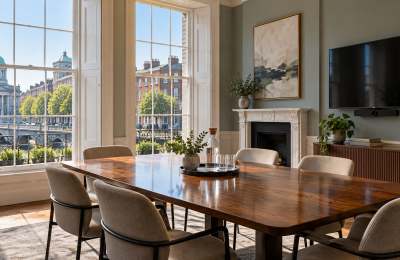
Office Space with Meeting Rooms in Dublin: What to Check Before Signing
Need a Dublin office with meeting rooms? Learn how to compare dedicated and bookable rooms, real ava...
 Sep 29, 2026
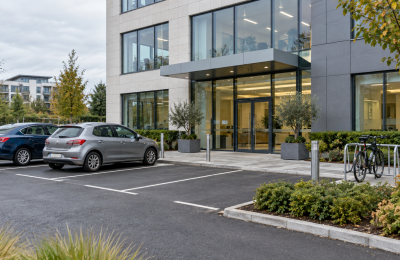
Office Space with Parking in Dublin
Looking for office space with parking in Dublin? Learn what to check about spaces, costs, visitor ac...
Thanks! We've got your request.
Our team will review your details and be in touch shortly with your personalised quote.