
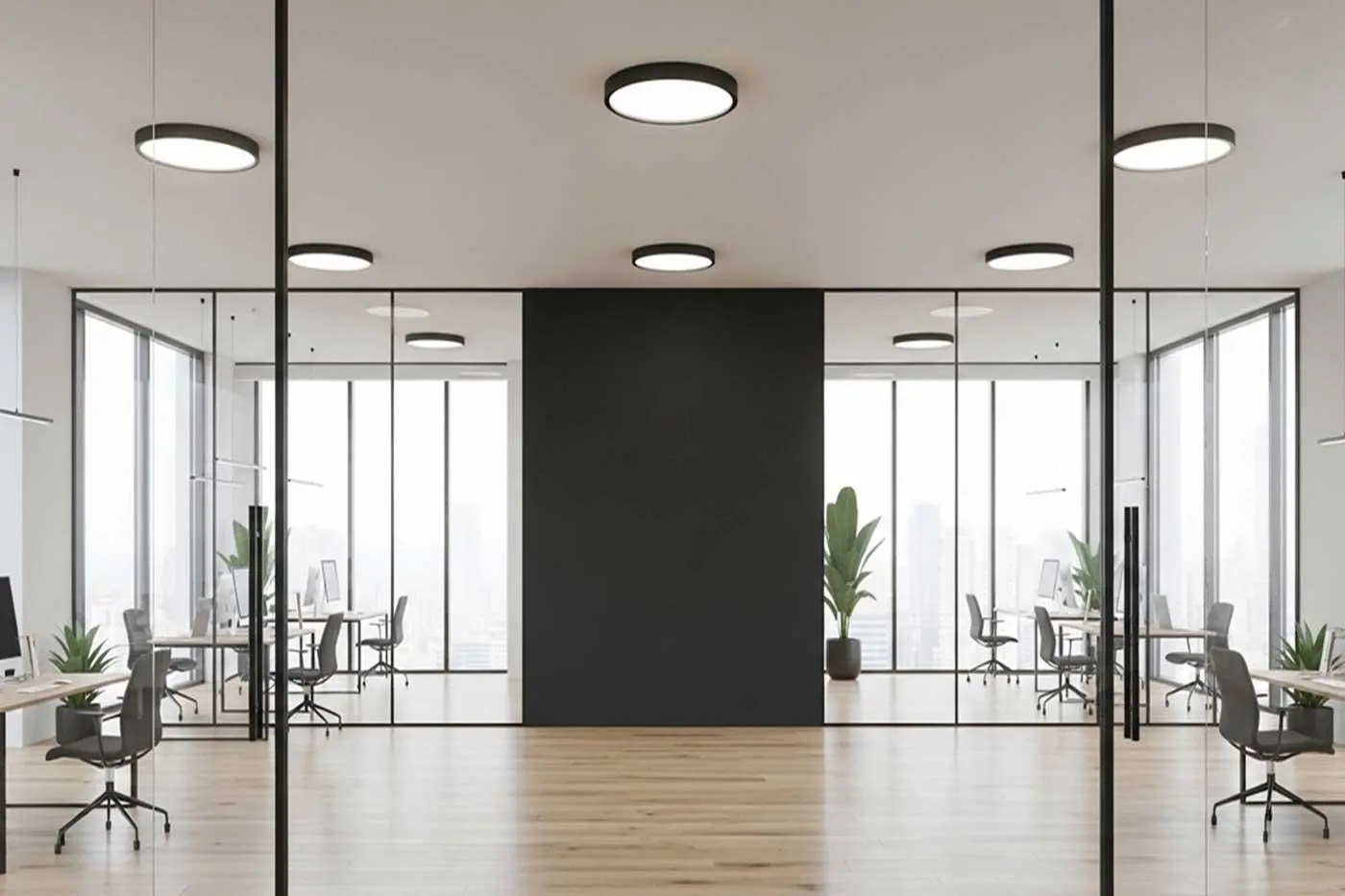
Cost of a Private Office in Dublin

How Much Does Office Space Cost in Dublin? A Guide to Office Rental Costs
Understanding the cost of office space in Dublin is one of the most important parts of any office search.
It is also one of the areas businesses most commonly misunderstand.
A company searching for an office in Dublin may initially compare properties based on the advertised monthly rent or price per desk. However, the true cost of occupying an office can be significantly different once factors such as commercial rates, service charges, utilities, furniture, fit-out, internet, cleaning and other operating costs are included.
The price of office space in Dublin can also vary considerably depending on the location, building quality, office size, agreement length and whether you choose a serviced office, managed office or traditional lease.
For businesses comparing office space in Dublin, the most important thing is therefore not simply finding the cheapest advertised office. It is understanding the total cost of occupation and finding the office that provides the best combination of location, flexibility, quality and value.
This guide explains the main factors that determine office rental costs in Dublin and what businesses should consider before making a decision.
How Much Does Office Space Cost in Dublin?
There is no single price for renting office space in Dublin.
Office costs can vary substantially depending on where the office is located and the type of workspace being considered.
A small serviced office for a five-person company will be priced very differently from a self-contained managed office for 30 people or a traditional lease for several thousand square feet.
The main factors influencing office rental costs in Dublin include:
- Location
- Number of desks or office size
- Building quality
- Office specification
- Serviced, managed or traditional lease structure
- Length of agreement
- Level of flexibility required
- Furniture and fit-out
- Meeting room requirements
- Parking
- Included services
- Commercial rates and service charges
When comparing offices, businesses should therefore look beyond the headline rent and calculate what the space will actually cost each month.
Which Areas of Dublin Have the Most Expensive Office Space?
Location remains one of the biggest influences on Dublin office rental prices.
Dublin 2 Office Space
Dublin 2 is traditionally one of the strongest and most sought-after office markets in Dublin.
Areas around St Stephen's Green, Merrion Square, Fitzwilliam Square, Baggot Street, Dawson Street and Harcourt Street remain particularly popular with professional services companies, technology businesses, financial firms and international organisations.
Businesses searching for office space in Dublin 2 are generally paying for several advantages.
These include a central location, strong public transport connections, access to restaurants and amenities, proximity to clients and employees, and a large concentration of high-quality office buildings.
Premium Georgian offices, modern developments and high-end flexible workspaces can all command stronger pricing in these locations.
For businesses where location, employee experience or client perception is particularly important, Dublin 2 may still represent good value despite the higher cost.
Dublin Docklands Office Space
The Dublin Docklands is another premium office location.
Grand Canal Dock, North Wall Quay and Sir John Rogerson's Quay contain many of Dublin's most modern office buildings and have historically attracted large technology, financial services and multinational companies.
The area offers modern Grade A office space, strong transport connections, extensive amenities and access to both the south and north Docklands.
Companies searching for office space in Dublin Docklands should generally expect pricing to reflect the quality of the buildings and the demand for space in the area.
However, the Docklands market also includes a growing range of serviced and managed office options, which can allow smaller businesses to access high-quality buildings without committing to a traditional long-term lease.
Where Can Businesses Find More Affordable Office Space in Dublin?
Businesses looking to reduce office costs do not necessarily need to move far from the city centre.
Areas such as Dublin 7 and Dublin 8 can provide more competitive office options while still maintaining convenient access to central Dublin.
Locations outside the traditional Dublin 2 core can also offer larger offices, more parking and lower overall occupancy costs.
South Dublin locations such as Sandyford, Leopardstown and surrounding business districts can be attractive for companies that prioritise parking, motorway access or employees living outside the city centre.
Other suburban office markets can also provide considerably more space for the same budget.
The right location depends on the workforce, clients and operating requirements of the business.
A cheaper office that creates a difficult commute for most employees may ultimately prove poor value. Equally, paying a substantial premium for a prestigious address may not make sense for a business that rarely receives clients.
The best office location is therefore not necessarily the cheapest or most expensive. It is the location that works commercially for the business.
What Is the Difference Between Serviced, Managed and Traditional Office Costs?
The type of office you choose has a major impact on how office costs are calculated.
Serviced Offices in Dublin
Serviced offices are particularly popular with startups, SMEs, international companies and businesses that require flexibility.
A serviced office will usually be provided fully furnished and ready to occupy.
Depending on the provider, the monthly fee may include:
- Office furniture
- Electricity
- Heating
- Cleaning
- Internet
- Reception services
- Shared kitchens
- Breakout areas
- Building maintenance
- Security
- Access to meeting rooms or communal facilities
Serviced office pricing is often quoted as either a monthly office price or a cost per workstation.
This makes budgeting relatively straightforward because many operating costs are combined into one monthly payment.
The headline monthly cost of a serviced office can sometimes look higher than the base rent on a traditional lease. However, this is not always a fair comparison because many additional operating costs are already included.
Managed Offices in Dublin
Managed office space generally sits between serviced offices and traditional leases.
A managed office often provides a company with a more private or self-contained workspace while retaining some of the convenience of a fully managed building.
Depending on the agreement, the workspace can be fitted out specifically for the occupier and may include private meeting rooms, kitchens, breakout areas and branding.
Managed offices can be particularly attractive to businesses that want their own identity and workspace but do not want to manage a traditional lease, fit-out project and multiple suppliers.
Pricing will depend heavily on the specification of the office, agreement length and level of customisation required.
Traditional Office Leases in Dublin
Traditional leased office space can offer greater control and may provide a lower headline rent, particularly for larger businesses planning to remain in the same location for several years.
However, the rent is only one part of the cost.
Businesses taking a traditional lease may also need to budget for:
- Commercial rates
- Service charges
- Utilities
- Furniture
- Internet
- Cleaning
- Insurance
- Repairs
- Office management
- Fit-out
- Professional fees
- Dilapidations at the end of the lease
These additional costs can materially increase the real cost of occupying the office.
For this reason, businesses comparing traditional leased office space with serviced or managed offices should compare the total occupancy cost rather than simply comparing rent.
What Hidden Costs Should Businesses Consider When Renting an Office in Dublin?
Hidden office costs can quickly change the economics of a property.
Commercial Rates
Commercial rates are payable on many business premises and can represent a significant annual expense.
Businesses considering traditional office space should establish the rates liability before agreeing terms.
Service Charges
Many multi-occupancy office buildings charge tenants a service charge.
This may cover building management, common areas, lifts, security, maintenance and other shared services.
Service charges vary substantially between buildings.
Utilities
Electricity, heating and other utilities may be included within a serviced office agreement but are commonly additional costs under a traditional lease.
Internet and Telecommunications
Reliable business internet is essential for most companies.
Businesses should establish whether connectivity is included and whether there are additional installation or monthly charges.
Furniture
A traditional office may be provided completely unfurnished.
Desks, chairs, meeting room furniture and storage can create a significant upfront cost.
Office Fit-Out
Fit-out is one of the biggest costs businesses can underestimate.
A new office may require partitioning, meeting rooms, kitchens, flooring, lighting, power, data cabling, acoustic treatment and branding.
The more bespoke the office requirement, the greater the potential cost.
Repairs and Dilapidations
Businesses taking traditional leases should also understand their repairing obligations and any dilapidation liability when the lease ends.
These costs are easy to overlook when comparing properties at the beginning of an office search.
Is a Serviced Office More Expensive Than a Traditional Lease?
Not necessarily.
A serviced office may have a higher headline monthly cost, but the comparison becomes much closer once the full operating costs of a traditional office are included.
For example, a business comparing a serviced office against a traditional lease should consider the cost of furniture, fit-out, rates, service charges, electricity, internet, cleaning and office management.
There is also the value of flexibility.
A business taking a serviced office may be able to sign a significantly shorter agreement than would normally be available under a traditional lease.
For a growing or changing company, this can reduce financial risk.
The correct comparison is therefore not:
Monthly serviced office fee versus monthly rent.
It should be:
Total serviced office cost versus total traditional office occupancy cost.
That provides a much more accurate picture.
Does a Longer Office Agreement Reduce the Cost?
In many cases, office providers and landlords will offer better commercial terms in return for a longer commitment.
A business willing to commit to 24 or 36 months may therefore achieve a lower effective monthly rate than a business seeking a short-term arrangement.
However, the cheapest monthly price is not always the best deal.
A three-year agreement may appear attractive today but become expensive if the company needs significantly more or less space within 12 months.
Businesses should consider expected headcount growth, remote working policies and future expansion before committing to a longer office term.
Flexibility has a financial value.
Sometimes paying slightly more for a shorter or more flexible agreement can save considerably more money later.
How Much Office Space Does My Business Need?
The amount of office space required depends on more than employee headcount.
A business should consider:
- Number of employees regularly attending the office
- Hybrid working arrangements
- Meeting room requirements
- Private office requirements
- Breakout areas
- Kitchen facilities
- Storage
- Future hiring plans
- Client meeting requirements
- Collaboration space
A company with 20 employees may not necessarily require 20 permanent desks if employees work on a hybrid basis.
Equally, another 20-person business may need more than 20 workstations due to planned recruitment.
Choosing the correct office size can have a major impact on overall costs.
Paying for unused desks or unnecessary space is one of the easiest ways for a business to waste money on property.
Should You Choose the Cheapest Office Available?
Usually not.
Office value is about much more than the monthly price.
A cheaper office may create additional costs through poor transport connections, limited meeting facilities, inadequate space or the need to relocate again quickly.
Businesses should consider the total value provided by the office.
This includes:
- Total monthly cost
- Location
- Transport links
- Quality of the workspace
- Meeting rooms
- Employee experience
- Flexibility
- Parking
- Expansion options
- Building amenities
- Agreement terms
The best office is the one that meets the company's requirements at the most sensible overall cost.
How Can Businesses Reduce Their Office Costs in Dublin?
There are several ways businesses can reduce the cost of office space without compromising excessively on quality.
Consider several locations rather than focusing on one street or postcode.
Compare serviced, managed and traditional office options.
Negotiate the commercial terms rather than accepting the quoted price immediately.
Review whether every employee requires a dedicated workstation.
Calculate the true all-in cost of each property.
Consider slightly longer agreements where the business has confidence in its future requirements.
Look at offices immediately outside the most expensive core locations.
Most importantly, compare multiple options before making a decision.
The Dublin office market contains a wide range of office providers, landlords and workspace models. Businesses that understand the wider market are usually in a stronger negotiating position.
What Is the Best Way to Compare Office Space in Dublin?
The easiest way is to create an all-in monthly cost for every office under consideration.
Rather than comparing one property at €X per month with another at €Y per month, calculate the actual expected cost of occupying each space.
For a traditional office, this could mean combining:
Rent + rates + service charge + utilities + internet + cleaning + furniture + fit-out + other operating costs.
For a serviced or managed office, many of these costs may already be included in the monthly fee.
Once every option has been converted into a comparable monthly figure, the difference between properties becomes much clearer.
Businesses can then make a decision based on value rather than headline pricing.
Frequently Asked Questions About Dublin Office Costs
How much does it cost to rent an office in Dublin?
The cost of renting an office in Dublin varies considerably depending on location, size, building quality and the type of office agreement. Serviced offices, managed offices and traditional leases are priced differently, so businesses should compare total occupancy costs rather than relying on the advertised rent alone.
What is the most expensive area for office space in Dublin?
Dublin 2 and the Dublin Docklands are generally among the most premium office markets. Locations around St Stephen's Green, Baggot Street, Merrion Square, Grand Canal Dock and Sir John Rogerson's Quay are particularly popular.
Where can I find cheaper office space in Dublin?
Businesses can often find more competitive office space in Dublin 7, Dublin 8 and suburban business districts. The right option depends on employee locations, transport requirements and the type of workspace required.
Are serviced offices good value?
Serviced offices can offer very good value because furniture, utilities, internet, cleaning and building services are often included in one monthly fee. They can be particularly attractive for businesses that value flexibility or want to avoid the upfront costs associated with fitting out an office.
What costs are involved in a traditional office lease?
In addition to rent, businesses may need to pay commercial rates, service charges, utilities, internet, cleaning, insurance, furniture, maintenance and fit-out costs. Repairing obligations and dilapidations should also be considered.
Can office rent in Dublin be negotiated?
In many situations, yes. The level of negotiation available depends on the property, landlord or office provider, current market conditions, length of agreement and the strength of the occupier. Businesses should review the wider market before agreeing commercial terms.
How Ping Offices Can Help
Finding office space in Dublin can be difficult because different properties are often priced in completely different ways.
One provider may quote a monthly serviced office fee. Another may quote a cost per desk. A landlord may quote an annual rent per square foot, excluding rates, service charges and other operating costs.
Comparing those options accurately can be difficult without understanding the full cost structure.
At Ping Offices, we help businesses search, compare and negotiate office space across Dublin.
We work across serviced offices, managed offices and traditional office options, helping clients understand what each property will actually cost rather than simply focusing on the headline price.
Our aim is straightforward: help businesses find the right office, understand the commercial terms and secure the strongest possible overall deal.
Whether you are searching for a small serviced office in Dublin city centre, a larger managed office, office space in Dublin 2, a Docklands location or a more cost-effective suburban option, comparing the wider market before committing can save both time and money.
The cheapest office is not always the best office.
The objective is to find the right combination of cost, location, flexibility and long-term suitability for your business.
News insight
 Oct 08, 2026
Dublin Office Space with Bike Storage and Showers: What to Check
A practical guide to choosing a Dublin office that works for people who cycle, from secure bike stor...
 Oct 06, 2026
Office Space with Meeting Rooms in Dublin: What to Check Before Signing
Need a Dublin office with meeting rooms? Learn how to compare dedicated and bookable rooms, real ava...
 Sep 29, 2026
Office Space with Parking in Dublin
Looking for office space with parking in Dublin? Learn what to check about spaces, costs, visitor ac...
Thanks! We've got your request.
Our team will review your details and be in touch shortly with your personalised quote.